Oats are an excellent choice for breakfast as they have numerous
health benefits.
Health Benefits of Oats
- Eating oats helps lower LDL "bad" cholesterol and may help reduce the risk of heart disease1.
- Oats help you feel fuller longer, which helps control your weight2.
- Oatmeal and oats may help lower blood pressure3.
- Oats may help reduce your risk of type 2 diabetes, since their soluble fibre helps control blood sugar4.
- Oats help prevent constipation, without the side effects associated with laxative medications5.
- Oats are high in beta-glucans, a kind of starch that stimulates the immune system and inhibits tumours6,7. This may help reduce your risk of some cancers.
- Early introduction of oats in children's diets may help reduce their risk of asthma8.
- Oats are higher in protein and healthy fats, and lower in carbohydrates than most other whole grains.
- Oats contain more than 20 unique polyphenols called avenanthramides, which have strong anti-oxidant, anti-inflammatory, and anti-itching activity9-12.
Oat Products
You can buy different types of oat products in the shops
and it’s sometimes confusing.
Very simply, the quicker the oats are to cook, the more
they’ve been processed. And the more they’ve been processed, the greater the
risk of oxidation of nutrients, such as essential oils and vitamins, which
reduces their nutritional value.
The least processed are whole oat groats and the most
processed are ‘instant oat’ products.
If you’re in a hurry, using instant oats is much better
than not eating oats at all.
With a little practice, though, you’ll find that cooking whole
oat grains, or oat groats, is easy and you can prepare enough for several
breakfasts in one go.

Simple guide to oat products
Whole Oat Groats
A groat is another name for a grain kernel. Whole oat
groats are the result of simply harvesting oats, cleaning them, and removing
their inedible hulls. You can most often find these in health food stores. They
take the longest to cook.
Steel Cut Oats
If you cut groats into two or three pieces with a sharp
metal blade, you get steel cut oats. They cook quicker than oat groats, because
water can more easily penetrate the smaller pieces. Steel cut oats are also
sometimes called Irish oatmeal.
Scottish Oatmeal
Instead of cutting oats with a steel blade, the Scots
traditionally stone-grind them, creating broken bits of varying sizes, which
some say results in a creamier porridge than steel-cutting.
Rolled Oats – regular (old fashioned)
Rolled oats (sometimes called old fashioned oats) are
created when oat groats are steamed and then rolled into flakes. This process
stabilises the healthy oils in the oats, so they stay fresh longer, and helps
the oats cook faster, by creating a greater surface area.
Rolled Oats – quick or instant
If you roll the oat flakes thinner, and/or steam them
longer, you create quick oats and ultimately instant oats.
Oat Flour
Oat flour is a whole grain flour that can be used in
baking, or for thickening soups and stews.
Recipe for whole oat porridge
Ingredients
|
Instructions
|
1 cup oat groats
4-5 cups water if using slow cooker
or
6 cups water if using regular cooking pot
|
Put oat groats and water in a slow cooker and cook
on medium heat for 2-3 hours or until the oats are soft, white and creamy.
You could also put them on a low heat setting in a slow cooker and leave overnight so the porridge is ready for breakfast in the morning.
Slow cookers are relatively cheap. I bought mine
for £14 ($23) in a supermarket.
If you don’t have a slow cooker, you can use a
regular cooking pot with a lid. You’ll probably find you need to add 6 cups
water for every 1 cup of oat groats because you lose more water by
evaporation with this method. Just bring the water to a boil and turn down
the heat low and allow the oat groats to simmer with the lid on until soft,
white and creamy.

This makes enough for 3 to 4 servings.
Store what
you don’t eat in a plastic container in the refrigerator for breakfasts later
in the week.
|
OR to save time
|
|
50g/2oz rolled oats or quick cook oats
1½ cups water
|
Add water to rolled or instant oats and simmer
gently for a few minutes while stirring until porridge becomes soft and
creamy.
This is enough for one serving.
|
½ cup (100ml) nut milk, e.g., hazelnut milk
1 tbsp pumpkin seeds
1 tbsp sunflower seeds
1 tbsp sesame seeds
20g/¾oz raisins
|
For extra flavour, you can use nut milk in
addition to water when cooking the porridge or when re-heating it after
storage in the refrigerator.
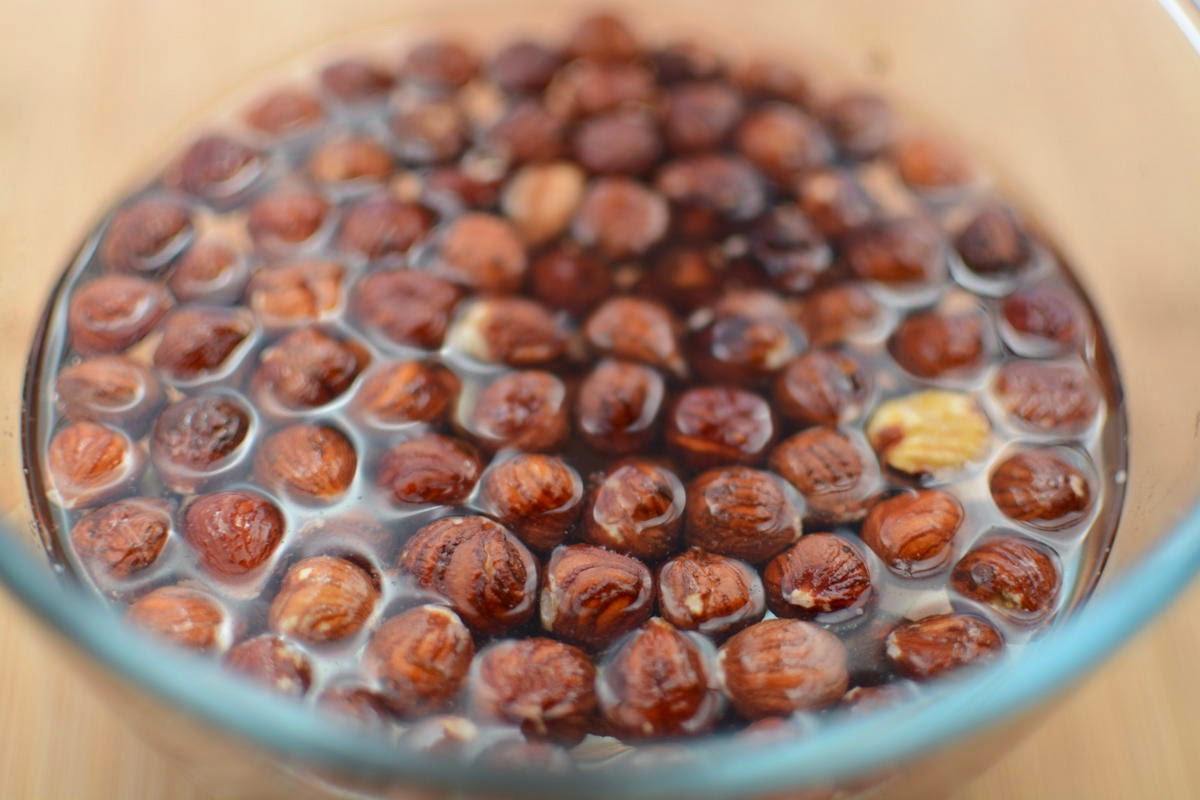
Hazelnut milk is one of my favourite plant-based
milks.
To save time, you can buy hazelnut and other
plant-based milks ready-made in supermarkets or health food stores. These are
convenient but they often contain a fair amount of added sugar and
preservatives.
It’s easy to make your own plant-based milks - click on this link for a recipe.

Home-made milks are tasty, fresh, free of
additives and preservatives, and you can completely control the integrity of
the product: the quality of the ingredients, the level of sweetness, and the
texture.
I like to sprinkle ground seeds and raisins on my
porridge.
To grind seeds, simply take a mixture of seeds of
your choice, for example, pumpkin, sunflower and sesame, and grind them to a
powder in a coffee grinder or food processor. Store what you don’t use in an
air-tight container in a refrigerator and use it up within 3 to 4 days.
|

If you have enjoyed this post and would like to keep in touch please sign up for my free email newsletter.
You can also visit my website and follow me on Facebook, Twitter, Pinterest and LinkedIn.
You can also visit my website and follow me on Facebook, Twitter, Pinterest and LinkedIn.
References
1. Davy BM, Davy KP, Ho RC, Beske SD,
Davrath LR, Melby CL. High-fiber oat cereal compared with wheat cereal
consumption favorably alters LDL-cholesterol subclass and particle numbers in
middle-aged and older men. The American
journal of clinical nutrition. Aug 2002;76(2):351-358.
2. Holt SH, Miller JC,
Petocz P, Farmakalidis E. A satiety index of common foods. European journal of clinical nutrition. Sep 1995;49(9):675-690.
3. Keenan JM, Pins JJ,
Frazel C, Moran A, Turnquist L. Oat ingestion reduces systolic and diastolic
blood pressure in patients with mild or borderline hypertension: a pilot trial.
The Journal of family practice. Apr
2002;51(4):369.
4. Lammert A, Kratzsch
J, Selhorst J, et al. Clinical benefit of a short term dietary oatmeal
intervention in patients with type 2 diabetes and severe insulin resistance: a
pilot study. Experimental and clinical
endocrinology & diabetes : official journal, German Society of
Endocrinology [and] German Diabetes Association. Feb 2008;116(2):132-134.
5. Sturtzel B, Mikulits
C, Gisinger C, Elmadfa I. Use of fiber instead of laxative treatment in a
geriatric hospital to improve the wellbeing of seniors. The journal of nutrition, health & aging. Feb
2009;13(2):136-139.
6. Rondanelli M,
Opizzi A, Monteferrario F. [The biological activity of beta-glucans]. Minerva medica. Jun 2009;100(3):237-245.
7. Albeituni SH, Yan
J. The effects of beta-glucans on dendritic cells and implications for cancer
therapy. Anti-cancer agents in medicinal
chemistry. Jun 2013;13(5):689-698.
8. Virtanen SM, Kaila
M, Pekkanen J, et al. Early introduction of oats associated with decreased risk
of persistent asthma and early introduction of fish with decreased risk of
allergic rhinitis. The British journal of
nutrition. Jan 2010;103(2):266-273.
9. Sur R, Nigam A,
Grote D, Liebel F, Southall MD. Avenanthramides, polyphenols from oats, exhibit
anti-inflammatory and anti-itch activity. Archives
of dermatological research. Nov 2008;300(10):569-574.
10. Meydani M. Potential
health benefits of avenanthramides of oats. Nutrition
reviews. Dec 2009;67(12):731-735.
11. Koenig R, Dickman
JR, Kang C, Zhang T, Chu YF, Ji LL. Avenanthramide supplementation attenuates
exercise-induced inflammation in postmenopausal women. Nutrition journal. 2014;13:21.
12. Yang J, Ou B, Wise
ML, Chu Y. In vitro total antioxidant capacity and anti-inflammatory activity
of three common oat-derived avenanthramides. Food chemistry. Oct 1 2014;160:338-345.