Showing posts with label recipe. Show all posts

Sunday, January 25, 2015

Thai Red Vegetable Curry


Thai red vegetable curry and rice
www.cookingforhealth.biz


Herbs and spices are used to enhance flavour in many types of cuisine across the globe.

Many of us know from travelling abroad, dining out or cooking at home that there’s considerable variability in the amount, type and combination of herbs and spices used in different types of cuisine.

Thai cuisine, for example, is famous for its aromatic and spicy dishes created using herbs and spices such as lemongrass, kaffir lime leaves, basil, galangal, ginger, garlic, chilli peppers, cumin, coriander and peppercorns.

Thai herbs and spices


Usually these variations in use of herbs and spices are attributed merely to cultural preferences.

But is this the only reason?

Each herb and spice has a unique aroma and flavour, which derive from compounds known as phytochemicals or “secondary compounds”, because they are secondary to the plant's basic metabolism.

These chemicals evolved in plants to protect them against herbivorous insects and vertebrates, fungi, pathogens, and parasites [1].

Most herbs and spices contain dozens of secondary compounds, including glucosides, saponins, tannins, alkaloids, essential oils, organic acids, and others, many thousands of which have been described in the literature [2,3].

Before the advent of modern medicine, herbs and spices were used in most cultures to prevent and treat a variety of health conditions, either incorporated into food or in specific preparations. Indeed, in many places, herbal medicine is still an important part of healthcare.

Scientific studies are generating more and more evidence to support the medicinal properties of herbs and spices.

Many of the phytochemicals or “secondary compounds” in plants have been shown to possess powerful anti-oxidant, anti-inflammatory, anti-microbial, anti-hypertensive, anti-cancer, anti-depressant, anti-anxiety and cholesterol-lowering activity [4-6]. Herbs and spices frequently contain high concentrations of these substances.

As many herbs and spices have considerable anti-bacterial, anti-fungal and anti-parasitic activity, it’s likely that their traditionally high use in hot climates is no accident. People found by trial and error that food kept longer and/or caused fewer stomach upsets if herbs and spices were incorporated [7].


This recipe for Thai-style red vegetable curry contains a range of herbs and spices rich in phytochemicals known for their medicinal properties.

The vegetables, herbs and spices used in this recipe contain high levels of antioxidant activity.

Antioxidants protect your body from damage caused by highly reactive molecules, called free radicals, produced as a normal by-product of metabolism.

Damage caused by free radicals contributes to aging and the development of chronic disease.

The picture below shows the antioxidant content of one serving of this Thai Red Vegetable Curry compared with one serving of a Burger King Double Whopper and Cheese with a medium portion of French fries.

The antioxidant content of the Thai Red Vegetable Curry is almost 5 times higher than that of the burger and fries.


The dish is also high in vitamins A, C and K; and contains substantial amounts of vitamins B1 and B6, as well as the minerals magnesium and manganese.

Lemongrass, for example, has been shown to have activity against the fungus Candida albicans [8] as well as anti-bacterial activity [9].

It’s also reported to have anti-inflammatory, anti-oxidant, anti-mutagenic, hypoglycaemic and anxiolytic properties [10].


Kaffir lime leaves contain volatile oils and other phytochemicals [11].

Traditionally, kaffir lime leaves have been used for treatment of colds, congestion, and coughs. In addition, they’re recommended for alleviating flatulence, treating indigestion and treating menstrual disorders.

Kaffir lime phytochemicals have also been shown to have anti-oxidant, anti-inflammatory and anti-hypertensive properties, which may be useful for preventing cancer and heart disease [11].

Kaffir lime leaves

Modern scientific investigations of coriander (also known as cilantro) have focused on its antimicrobial properties, anti-anxiety action, and cholesterol-lowering effects.

Its cholesterol-lowering action is the result of coriander stimulating the conversion of cholesterol to bile acids within the liver, an effect that would likely improve digestion of fat.


Turmeric is reported to have numerous health benefits due to the anti-inflammatory and anti-oxidant properties of its phytochemicals, particularly curcumin.

Ingredients


Makes 4 servings


  • 1 red onion (150g/5oz) (finely sliced into half-moons)
  • 1 clove garlic (crushed)
  • 1 tablespoon olive oil
  • 1 pinch sea salt
  • 1 medium carrot (cut into matchsticks)
  • ½ red bell pepper and ½ yellow bell pepper (finely sliced)
  • 240g/8oz cooked beans – you could use green lentils, black eye beans, butter beans, haricot beans, cannellini beans, edamame, flageolet beans, pinto beans or whatever you have available. You can use canned beans or cook your own dried beans (see below). You could also use tofu (cut into small cubes) instead.
  • 1 strip dried kombu sea vegetable (optional - see instructions for cooking your own beans below)
  • 2 tablespoons Thai red curry paste. I made my own (see below for instructions) or you could buy a jar from the shops and follow the manufacturer’s instructions.
  • 1 can coconut milk or make your own by adding 2-3 tablespoons coconut powder to 1 cup water (making your own from coconut powder is cheaper than buying cans of coconut milk. Coconut powder is available online or in certain supermarkets and international food stores). Coconut contains a high percentage of saturated fat, so it's best not to use it too frequently in your cooking.
  • 1 teaspoon ground turmeric
  • 4 kaffir lime leaves
  • 40g baby leaf spinach
  • Small bunch of fresh coriander/cilantro

Method


Cooking your own dried beans


It's fine to use canned beans to save time.

If you're cooking your own dried beans, you'll need approximately 3/4 cup dried beans and 4-5 cups water to cover them completely to a depth of 2 inches/5cm, depending on the size of the pan you use.


You can also add a strip of dried kombu sea vegetable, as this adds valuable minerals, and helps to tenderise and enhance the flavour of the beans.

If you soak the dried beans overnight in cold water before cooking, this will reduce the cooking time. Drain and rinse the beans before cooking. If you forget to soak them first, it doesn't matter, they may just take a bit longer to cook properly.

I usually cook dried beans in my slow cooker, as I can put them on and forget about them whilst doing other things, safe in the knowledge that they won't dry out and burn.

You can use a regular cooking pot but be aware that if you need to cook the beans for a long time, the water will evaporate. You'll need to keep an eye on them and top up the pan with boiling water if necessary.

Cooking time depends on the type and age of the beans.

The smaller and fresher the beans, the less time they'll need.

Large and/or old beans typically take longer.

Green lentils, for example, will probably be soft within an hour; pinto beans may take 2 to 3 hours. If your dried beans are past their "best before" date, they may remain like bullets however long you cook them for. Hard beans are very indigestible and create more intestinal gas, so I recommend that you use dried beans that are as fresh as possible.

To test if they're cooked, remove a small number of beans and press them between your fingers and thumb; they should squash easily.

Preparing the curry


Add olive oil and salt to a thick-based pan and gently sauté onion and garlic for 5-10 minutes until soft and translucent.

Add carrot, peppers, beans, Thai red curry paste, coconut milk, turmeric and kaffir lime leaves and simmer for 15 minutes until the vegetables are cooked.

Add baby spinach leaves and some fresh coriander to taste and simmer for a further 5 minutes.


Serve with brown rice and garnish with fresh coriander/cilantro.


How to make Thai red curry paste


Ingredients


  • 1 stalk fresh lemon grass (finely chopped)
  • 2 large red chilli peppers or 2 small birds eye chillis if you want it to be hot (seeds removed and finely chopped)
  • 2 cm piece fresh root ginger (peeled and finely chopped)
  • 1 teaspoon ground coriander
  • 1 teaspoon ground cumin
  • 1 teaspoon ground paprika
  • 1 tablespoon fresh lemon juice
  • 1-2 tablespoons Thai fish sauce or Ume Plum seasoning if you are vegan
  • ¼ red onion (finely chopped)
  • 2 cloves garlic (finely chopped)
  • 2 tablespoons tomato puree
  • 1 tablespoon rice malt syrup
  • 2 tablespoons coconut milk

Method


Blend all ingredients using a hand blender or food processor. Freeze what you don’t use in portions, so you have some ready prepared for future meals.

Alternatively, you can buy pre-made Thai red curry paste. This isn't as fresh but is very convenient.


~

If you've enjoyed this post and would like to keep in touch please sign up for my free email newsletter and get a free report on calcium and your health.

You can also visit my website and follow me on Facebook, Twitter, Pinterest and LinkedIn.

~

Nutrition information


References

  1. Fraenkel GS. The Raison d'Être of Secondary Plant Substances: These odd chemicals arose as a means of protecting plants from insects and now guide insects to food. Science. 1959;129(3361):1466-1470.
  2. Lampe JW. Spicing up a vegetarian diet: chemopreventive effects of phytochemicals. The American Journal of Clinical Nutrition. 2003;78(3 Suppl):579s-583s.
  3. Lai PK, Roy J. Antimicrobial and chemopreventive properties of herbs and spices. Current Medicinal Chemistry. 2004;11(11):1451-1460.
  4. Howes MJ, Simmonds MS. The role of phytochemicals as micronutrients in health and disease. Current Opinion in Clinical Nutrition and Metabolic Care. 2014;17(6):558-566.
  5. Rodriguez-Casado A. The Health Potential of Fruits and Vegetables Phytochemicals: Notable Examples. Critical Reviews in Food Science and Nutrition. 2014:0.
  6. Liu RH. Dietary bioactive compounds and their health implications. J Food Sci. 2013;78 Suppl 1:A18-25.
  7. Sherman PW, Billing J. Darwinian Gastronomy: Why We Use Spices: Spices taste good because they are good for us. BioScience. 1999;49(6):453-463.
  8. Amornvit P, Choonharuangdej S, Srithavaj T. Lemongrass-Incorporated Tissue Conditioner Against Candida albicans Culture. Journal of Clinical and Diagnostic Research : JCDR. 2014;8(7):Zc50-52.
  9. Mickiene R, Bakutis B, Baliukoniene V. Antimicrobial activity of two essential oils. Annals of Agricultural and Environmental Medicine : AAEM. 2011;18(1):139-144.
  10. Shah G, Shri R, Panchal V, Sharma N, Singh B, Mann AS. Scientific basis for the therapeutic use of Cymbopogon citratus, stapf (Lemon grass). Journal of Advanced Pharmaceutical Technology & research. 2011;2(1):3-8.
  11. Orranuch Norkaew KP, Patcharee Pripdeevech, Phumon Sookwong and Sugunya Wongpornchai. Supercritical Fluid Extraction and Gas Chromatographic-Mass Spectrometric Analysis of Terpenoids in Fresh Kaffir Lime Leaf Oil. Chiang Mai J. Sci. . 2013;40 (2):240-247.


Friday, January 16, 2015

How to make vegetable sushi nori


When I was a PhD student, I was fortunate to be awarded a scholarship for a study trip to Japan. 

There, I visited all the key University labs and Research Institutes working in my field of research.

Beforehand, I'd bought a Railcard and had planned to stay in Youth Hostels over the country. 

Due to the extraordinary hospitality of my academic contacts, however, I ended up staying with different Japanese families for the entire time, which was a real privilege.

I'll never forget one evening in the home of a Professor at the University of Okayama. His wife and three young children all sat round the kitchen table making sushi rolls, which we later ate for supper.

The children were so excited to meet an English person and thrilled to show me their food and customs. It was magic.

In Japan, making sushi is considered a vocation, an art form, and chefs, or itamae, train with almost military rigour for anything from 2 to 20 years to become proficient.

Traditionally, raw fish is used in sushi and cutting it up in the correct way appears to be akin to learning to perform brain surgery.

Even the preparation of rice is a precise procedure. Too much rice and it will be more than a mouthful; too little and it will be overpowered by the fish; too much pressure and it will be hard; too little and the pellet will fall apart.

Most of us don't aspire to the heights of becoming a senior sushi chef, so we can relax and enjoy creating simple vegetable sushi rolls, which are great for lunchboxes, snacks, picnics and parties. 

This recipe for sushi rolls uses the sea vegetable known in Japanese as nori (Porphyra spp).

Nori is the most popular of all sea vegetables as it's versatile and easy to prepare. It has a sweet and salty taste. 

Nori contains more protein than other sea vegetables, averaging a remarkable 40% by weight.  It contains about 1.5 times more vitamin C than oranges and as much vitamin A as carrots.  Nori is the only sea vegetable reported to contain the biologically active form of vitamin B12. The mineral content of nori is about 10% by weight, which is lower than other sea vegetables, but is still very high for a vegetable food.  

Sea vegetables have numerous health benefits and are valuable for boosting mineral intake in your diet.

Nori is sold either as flakes or as sheets, which are folded 7 or 10 to a pack.  

The flakes don't require soaking or cooking and can be sprinkled directly onto grains, or incorporated into purées, batters, sauces, dressings and dips to give an appealing herb-like flavour.  

Nori sheets are best lightly toasted before use.  This is done by rotating the sheet, shiny side up, over a low flame for a few seconds until its colour changes to a lighter green.  Pre-toasted nori sheets are also available in the shops.  Once toasted, nori can simply be torn into smaller pieces or cut with scissors into attractive shapes.  These pieces can be added as a garnish to cereal dishes, soups and salads or mixed with nuts and seeds to make a tasty snack.  Toasted sheets of nori can also be used to make sushi rolls and rice balls.

Ingredients

Makes 2 sushi rolls, at least 3 servings

  • 2 sheets nori sea vegetable, toasted
  • 1 cup short-grain brown rice
  • 2 cups boiling water
  • 1 tbsp brown rice vinegar
  • 1 tbsp rice malt syrup
  • 1 tsp peanut butter
  • ½ tsp umeboshi plum paste (available online or in health food stores)
  • 1 carrot (100g/4oz), finely sliced
  • 1/3 raw cucumber (100g/4oz), finely sliced
  • ¼ red pepper (30g), finely sliced
  • 50g/2oz marinated tofu, finely sliced
  • Few pieces of sushi ginger or 1 tsp mustard 


Method


Add 1 cup short-grain rice and 2 cups boiling water to a thick-based pan, cover with a lid and bring to a boil. 

Turn down to a very low heat and simmer for 40-45 minutes until water has evaporated and rice is soft. 

Mix brown rice vinegar and rice malt syrup together and stir into rice. 

Allow to cool. You need to use short-grain rice as this sticks together, unlike long grain or basmati rice.


You can buy nori sheets already toasted. 


If you have untoasted nori, simply hold the rough side of each sheet over a low flame for a few seconds until colour changes to a lighter green. 


Cut the carrot and cucumber into fine strips. I cut the vegetables thinly on the diagonal and then slice the pieces into narrow strips.


Having prepared all the fillings, lay one sheet of toasted nori, shiny side down, on a bamboo sushi mat, with the stripping of the map running horizontally.


Spread 1 cup  cooked rice evenly over the nori, leaving 1/3 inch (1cm) at the bottom, nearest you, and 1 ½ inches (4 cm) at the top, firmly pressing the rice into the nori


Gently spread nut butter, umeboshi paste, carrots, cucumber, pepper, tofu and sushi ginger horizontally in a strip across the rice.

If you add too much filling, you'll find it difficult to roll the sushi up.


Pick up the edge of the bamboo sushi mat and carefully roll it away from you around the ingredients, into a cylindrical roll. 

Using your finger or a pastry brush, spread a little water on the exposed top edge of the nori to help the roll stick together.


You should end up with a cylindrical roll as in the photograph below.


Using a sharp knife dipped into water, cut the sushi nori roll into slices and serve garnished with chopped vegetables and salad.

You can create many variations with different fillings and flavours, just like sandwiches.  

For example, you can include avocado with lime juice; spring onions (scallions); bean sprouts; roasted sweet potato or squash; sesame seeds; toasted walnuts; shiitake mushrooms sautéed in soy sauce; mustard; wasabi; regular mustard; steamed broccoli pieces or asparagus.


~

If you've enjoyed this post and would like to keep in touch please sign up for my free email newsletter and get a free report on calcium and your health.

You can also visit my website and follow me on Facebook, Twitter, Pinterest and LinkedIn.

~

Nutrition information


Mushroom stroganoff - plant-based, vegan recipe


Stroganoff or stroganov is a classic Russian dish normally containing sautéed pieces of beef served in a sauce with smetana (sour cream). 

According to history books, the first published recipe for stroganoff was in Elena Molokhovets' classic Russian cookbook A Gift to Young Housewives (1861), which involved lightly floured beef cubes (not strips) sautéed, sauced with prepared mustard and bouillon, and finished with a small amount of sour cream: no onions, no mushrooms.

This version, adapted from a recipe in the Forks Over Knives Cookbook, is free from meat or dairy products, contains onions and mushrooms, and is 100% plant-based and vegan, so quite different from the original. Nevertheless it's full of flavour, highly nutritious and very delicious.

Most notably, this recipe contains more than the daily guideline amount of vitamin B12, a nutrient which is typically hard to obtain on plant-based or vegan diets.

Please click here to read more detail about vitamin B12 and plant-based and vegan diets.

The vitamin B12 comes from shiitake mushrooms and nutritional yeast, which is added to impart an umame, savoury, almost cheesy flavour.

Ingredients

Makes 4 servings

  • 1 tbsp olive oil or 2 tbsp water
  • 1 pinch sea salt
  • 1 medium onion, peeled and sliced into half moons 
  • 1 clove garlic, peeled and crushed
  • 2 tsp dried thyme
  • 1 tsp dried rosemary
  • 250g (8oz) chestnut mushrooms, washed, stemmed and cut into pieces
  • 125g (4 oz) shiitake mushrooms, washed, stemmed and cut into pieces
  • 1 tbsp nutritional yeast
  • ½ cup dry white wine
  • 1 tbsp soy sauce
  • 1 cup tofu sour cream, made from:
  • One 340g/12oz package of silken tofu, drained
  • 1 tbsp lemon juice
  • 1 tbsp red wine vinegar
  • 1 tsp ground arrowroot powder
  • Salt to taste
  • 450g (1lb) whole wheat pasta (e.g., fettucine, penne) or gluten-free pasta if you are wheat intolerant


Method


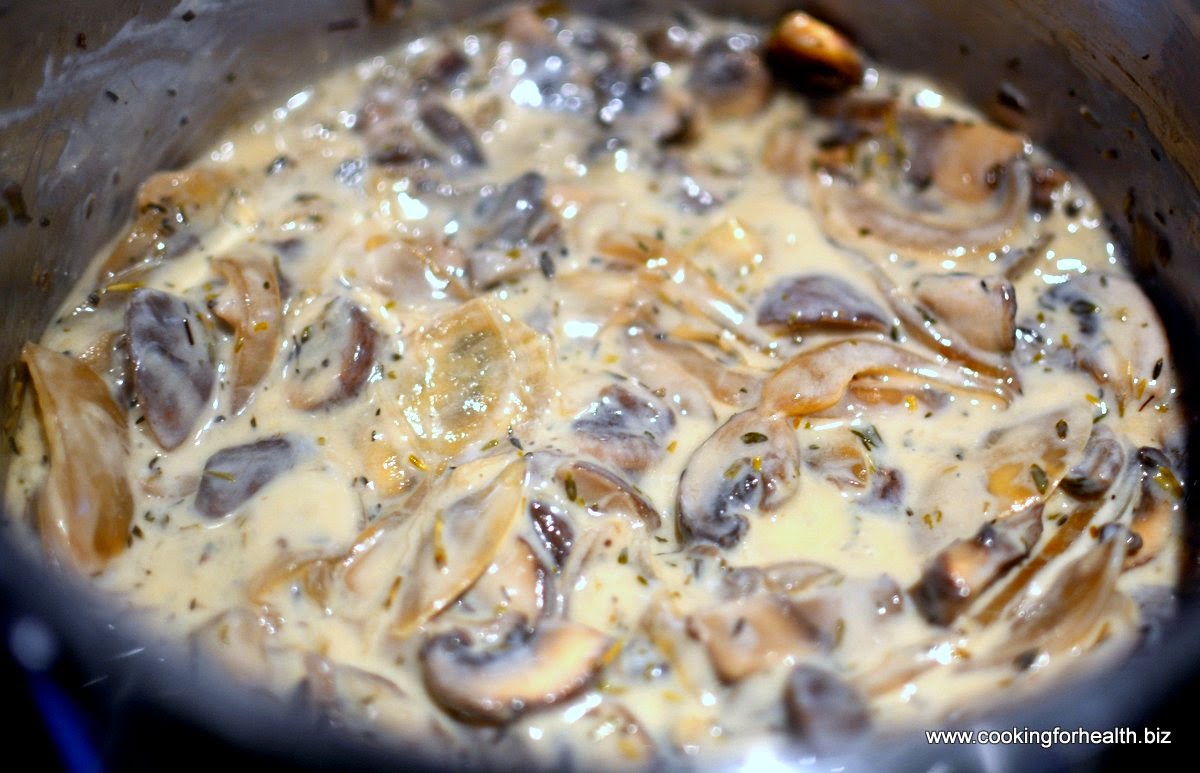
Add oil or water and salt to a large pan and gently sauté onion until soft and translucent. Add garlic, thyme and rosemary and cook for another minute. Stir in mushrooms, nutritional yeast, soy sauce and wine, stir, and cook over a low heat for 20 minutes.


While mushrooms are cooking, prepare tofu sour cream by combining all ingredients in a blender until smooth and creamy. 


Add pasta to boiling water, bring it back to a boil and stir for a few seconds to prevent the pasta from sticking together. Cook according to manufacturer’s instructions. For dried pasta, this is usually 10-12 minutes to achieve an al dente texture. Fresh pasta generally takes less time. Drain.

al dente [al-DEN-tay] An Italian phrase meaning “to the tooth,” used to describe pasta or other food that is cooked only until it offers a slight resistance when bitten into, but which is not soft or overdone.


When the stroganoff has finished cooking, stir in 1 cup tofu sour cream. 


Add the cooked pasta and toss well. Serve garnished with fresh parsley and a side salad.


~

If you've enjoyed this post and would like to keep in touch please sign up for my free email newsletter and get a free report on calcium and your health.

You can also visit my website and follow me on Facebook, Twitter, Pinterest and LinkedIn.


Nutrition information


Saturday, July 26, 2014

Creamy broccoli and almond soup


Broccoli is one of the most nutrient-dense foods.

It's an excellent source of vitamins K, C and A, as well as folic acid and fibre; and a very good source of phosphorus, potassium, magnesium and the vitamins B6 and E.

Many of its health benefits are due to its phytonutrients.

Broccoli is rich in phytochemicals called glucosinolates with well-evidenced anti-cancer properties and the carotenoid lutein, which is a powerful antioxidant known to prevent macular degeneration.


Creamy broccoli and almond soup is is one of my favourite plant-based soup recipes. It's delicious, easy to prepare and very satisfying.

The creamy texture comes from the ground almonds and gently sauted onions and it's vegan, gluten-free, dairy-free and added sugar-free.

Recipe


Yield

• Makes 4 servings

Serving size

• 340g/12oz

Calories per serving

• 151

Tools

• Thick-based cooking pot
• Simple hand blender

Prepare ahead

• Store any portions leftover in the refrigerator or freezer


Ingredients


• 2 tsp olive oil
• 1 pinch sea salt
• 1 tsp ground cumin
• 1 tsp ground coriander
• 2 white onions (300g/10½oz) (roughly chopped)
• 1 head broccoli (400g/14oz), washed and cut into small florets. Cut stalks into small pieces. Set aside a few florets, cut into bite-sized pieces, to add at the end.
• 2-3 cups water
• 3 tbsp ground almonds
• 1 dessertspoon sweet white miso, dissolved in a little water to make it easier to mix into the dish         without lumps
• 1 tsp flaked almonds

Method


Add olive oil and a small pinch of salt to a thick-based pan. Add the chopped onions and spices and sweat gently over a low heat until the onions are soft and translucent.

Sweat - A technique by which ingredients, particularly vegetables, are cooked gently in a small amount of fat over low heat, in a tightly covered pot. With this method, the ingredients soften without browning, and cook in their own juices. 

Sweating is different from sautéing, which is cooking food quickly in a small amount of oil or other fat in a skillet or sauté pan over direct heat.

Add broccoli florets (apart from the small handful of florets you’ve put to one side) and the chopped broccoli stalks.

Add enough water to just cover the vegetables. Don’t add too much water at this stage otherwise the soup will end up watery and it will take you ages to reduce it. If the soup is too thick, you can always add more water later. Bring to a boil, then turn down the heat low and simmer for 15-20 minutes until the broccoli is soft enough to blend. Don’t overcook it otherwise the broccoli will lose its vibrant green colour.

Blend the soup with a simple hand blender. Add the ground almonds and sweet white miso to taste.

Add the small broccoli florets you set aside and simmer for a further 2 minutes, until they are cooked al dente.

al dente [al-DEN -tay] An Italian phrase meaning “to the tooth,” used to describe pasta or other food that is cooked only until it offers a slight resistance when bitten into, but which is not soft or overdone.

Serve the soup garnished with flaked almonds.


There are many dishes you can make using broccoli. Check out my recipe for purple spouting broccoli with mushrooms and arame.


If you've enjoyed this post and would like to keep in touch please sign up for my free email newsletter.

You can also visit my website and follow me on Facebook, Twitter, Pinterest and LinkedIn.

Saturday, June 28, 2014

Oat porridge and its health benefits


Oats are an excellent choice for breakfast as they have numerous health benefits.

Health Benefits of Oats


  • Eating oats helps lower LDL "bad" cholesterol and may help reduce the risk of heart disease1.
  • Oats help you feel fuller longer, which helps control your weight2.
  • Oatmeal and oats may help lower blood pressure3.
  • Oats may help reduce your risk of type 2 diabetes, since their soluble fibre helps control blood sugar4.
  • Oats help prevent constipation, without the side effects associated with laxative medications5.
  • Oats are high in beta-glucans, a kind of starch that stimulates the immune system and inhibits tumours6,7. This may help reduce your risk of some cancers.

  • Early introduction of oats in children's diets may help reduce their risk of asthma8.
  • Oats are higher in protein and healthy fats, and lower in carbohydrates than most other whole grains.
  • Oats contain more than 20 unique polyphenols called avenanthramides, which have strong anti-oxidant, anti-inflammatory, and anti-itching activity9-12.


Oat Products


You can buy different types of oat products in the shops and it’s sometimes confusing.

Very simply, the quicker the oats are to cook, the more they’ve been processed. And the more they’ve been processed, the greater the risk of oxidation of nutrients, such as essential oils and vitamins, which reduces their nutritional value.

The least processed are whole oat groats and the most processed are ‘instant oat’ products.

If you’re in a hurry, using instant oats is much better than not eating oats at all.

With a little practice, though, you’ll find that cooking whole oat grains, or oat groats, is easy and you can prepare enough for several breakfasts in one go.


Simple guide to oat products


Whole Oat Groats
A groat is another name for a grain kernel. Whole oat groats are the result of simply harvesting oats, cleaning them, and removing their inedible hulls. You can most often find these in health food stores. They take the longest to cook.

Steel Cut Oats
If you cut groats into two or three pieces with a sharp metal blade, you get steel cut oats. They cook quicker than oat groats, because water can more easily penetrate the smaller pieces. Steel cut oats are also sometimes called Irish oatmeal.

Scottish Oatmeal
Instead of cutting oats with a steel blade, the Scots traditionally stone-grind them, creating broken bits of varying sizes, which some say results in a creamier porridge than steel-cutting.

Rolled Oats – regular (old fashioned)
Rolled oats (sometimes called old fashioned oats) are created when oat groats are steamed and then rolled into flakes. This process stabilises the healthy oils in the oats, so they stay fresh longer, and helps the oats cook faster, by creating a greater surface area.

Rolled Oats – quick or instant
If you roll the oat flakes thinner, and/or steam them longer, you create quick oats and ultimately instant oats.

Oat Flour
Oat flour is a whole grain flour that can be used in baking, or for thickening soups and stews.

Recipe for whole oat porridge


Ingredients

Instructions

1 cup oat groats

4-5 cups water if using slow cooker
or
6 cups water if using regular cooking pot


Put oat groats and water in a slow cooker and cook on medium heat for 2-3 hours or until the oats are soft, white and creamy.

You could also put them on a low heat setting in a slow cooker and leave overnight so the porridge is ready for breakfast in the morning.

Slow cookers are relatively cheap. I bought mine for £14 ($23) in a supermarket.

If you don’t have a slow cooker, you can use a regular cooking pot with a lid. You’ll probably find you need to add 6 cups water for every 1 cup of oat groats because you lose more water by evaporation with this method. Just bring the water to a boil and turn down the heat low and allow the oat groats to simmer with the lid on until soft, white and creamy.


This makes enough for 3 to 4 servings. 

Store what you don’t eat in a plastic container in the refrigerator for breakfasts later in the week.

OR to save time

50g/2oz rolled oats or quick cook oats

1½ cups water


Add water to rolled or instant oats and simmer gently for a few minutes while stirring until porridge becomes soft and creamy.

This is enough for one serving.


½ cup (100ml) nut milk, e.g., hazelnut milk

1 tbsp pumpkin seeds
1 tbsp sunflower seeds
1 tbsp sesame seeds

20g/¾oz raisins


For extra flavour, you can use nut milk in addition to water when cooking the porridge or when re-heating it after storage in the refrigerator.

Hazelnut milk is one of my favourite plant-based milks.

To save time, you can buy hazelnut and other plant-based milks ready-made in supermarkets or health food stores. These are convenient but they often contain a fair amount of added sugar and preservatives.

It’s easy to make your own plant-based milks - click on this link for a recipe.

Home-made plant-based milk


Home-made milks are tasty, fresh, free of additives and preservatives, and you can completely control the integrity of the product: the quality of the ingredients, the level of sweetness, and the texture.

I like to sprinkle ground seeds and raisins on my porridge.

To grind seeds, simply take a mixture of seeds of your choice, for example, pumpkin, sunflower and sesame, and grind them to a powder in a coffee grinder or food processor. Store what you don’t use in an air-tight container in a refrigerator and use it up within 3 to 4 days.


If you have enjoyed this post and would like to keep in touch please sign up for my free email newsletter.

You can also visit my website and follow me on Facebook, Twitter, Pinterest and LinkedIn.


References


1.          Davy BM, Davy KP, Ho RC, Beske SD, Davrath LR, Melby CL. High-fiber oat cereal compared with wheat cereal consumption favorably alters LDL-cholesterol subclass and particle numbers in middle-aged and older men. The American journal of clinical nutrition. Aug 2002;76(2):351-358.
2.          Holt SH, Miller JC, Petocz P, Farmakalidis E. A satiety index of common foods. European journal of clinical nutrition. Sep 1995;49(9):675-690.
3.          Keenan JM, Pins JJ, Frazel C, Moran A, Turnquist L. Oat ingestion reduces systolic and diastolic blood pressure in patients with mild or borderline hypertension: a pilot trial. The Journal of family practice. Apr 2002;51(4):369.
4.          Lammert A, Kratzsch J, Selhorst J, et al. Clinical benefit of a short term dietary oatmeal intervention in patients with type 2 diabetes and severe insulin resistance: a pilot study. Experimental and clinical endocrinology & diabetes : official journal, German Society of Endocrinology [and] German Diabetes Association. Feb 2008;116(2):132-134.
5.          Sturtzel B, Mikulits C, Gisinger C, Elmadfa I. Use of fiber instead of laxative treatment in a geriatric hospital to improve the wellbeing of seniors. The journal of nutrition, health & aging. Feb 2009;13(2):136-139.
6.          Rondanelli M, Opizzi A, Monteferrario F. [The biological activity of beta-glucans]. Minerva medica. Jun 2009;100(3):237-245.
7.          Albeituni SH, Yan J. The effects of beta-glucans on dendritic cells and implications for cancer therapy. Anti-cancer agents in medicinal chemistry. Jun 2013;13(5):689-698.
8.          Virtanen SM, Kaila M, Pekkanen J, et al. Early introduction of oats associated with decreased risk of persistent asthma and early introduction of fish with decreased risk of allergic rhinitis. The British journal of nutrition. Jan 2010;103(2):266-273.
9.          Sur R, Nigam A, Grote D, Liebel F, Southall MD. Avenanthramides, polyphenols from oats, exhibit anti-inflammatory and anti-itch activity. Archives of dermatological research. Nov 2008;300(10):569-574.
10.        Meydani M. Potential health benefits of avenanthramides of oats. Nutrition reviews. Dec 2009;67(12):731-735.
11.        Koenig R, Dickman JR, Kang C, Zhang T, Chu YF, Ji LL. Avenanthramide supplementation attenuates exercise-induced inflammation in postmenopausal women. Nutrition journal. 2014;13:21.
12.        Yang J, Ou B, Wise ML, Chu Y. In vitro total antioxidant capacity and anti-inflammatory activity of three common oat-derived avenanthramides. Food chemistry. Oct 1 2014;160:338-345.

Thursday, August 1, 2013

How to make water kefir - a naturally fizzy fermented drink with numerous health benefits

Lime and ginger kefir
www.cookingforhealth.biz

Water kefir is a wonderful mildly zesty sparkling fermented beverage. It can be likened to a natural, light and refreshing soda - perfect for a healthy drink alternative. 

It is fermented at room temperatures, typically with raw sugar, lemon and dried fruit in water, for about 24 to 48 hours. 

Water kefir has many interesting health benefits and is also a great option for those sensitive to milk, or on vegan or plant-based diets.


I have to confess that, until recently, I had never heard of water kefir.

I knew about traditional kefir - a fermented milk drink popular in the Middle East, Eastern Europe and Russia and mentioned in Marco Polo's famous book of travels - but I had no idea how it is made. 

The word kefir is said to have originated from the Turkish word keyif which means ‘good feeling’.

Neither did I have a clue that non-milk based kefir drinks can also be produced.

Further reading revealed that traditional kefir is prepared by inoculating cow, goat, or sheep milk with a microbial culture contained in kefir grains. In the past, kefir was made in skin bags that were hung near a doorway; the bag would be knocked by anyone passing through the doorway to help keep the milk and the microbial culture well mixed. 


The microbial culture added to the milk causes it to ferment. 

The fermentation results in numerous components in the kefir including lactic acid, acetic acid, carbon dioxide, ethanol and aromatic compounds. These substances create kefir's unique organoleptic characteristics: fizzy, acid taste, tart and refreshing flavour.

For those who are lactose-intolerant or, like me, prefer not to consume dairy products, traditional kefir is of little interest.

But one day my friend Lisa White, who is a naturopath in Adelaide, Australia, posted a picture of some weird-looking granules on her Facebook page. 

I asked her what they were and she explained that they were kefir grains. 

Evidently, you can add kefir grains to sugared water, fruit juice, coconut milk, grain or nut milks and produce fermented drinks with numerous reported health benefits.

I was interested but the grains looked a bit odd so I did not think anything more about it.

A few days later, I arrived at my weekly Ashtanga yoga class and, out of the blue, my teacher Jane Piddington asked me if I wanted any kefir grains.

So in one week, having never heard of kefir grains before, not only had two unconnected people mentioned them to me, I was now being offered some. 

My curiosity was well and truly piqued, so I accepted Jane's offer and took these strange gel-like particles home to conduct some experiments in my kitchen laboratory.


Kefir grains
www.cookingforhealth.biz

What are kefir grains?


It turns out that kefir grains are a symbiotic community of many species of lactic acid bacteria and yeasts held together in a white or yellowish gel-like matrix of proteins, lipids and sugars, which is exuded by the organisms themselves. 

The gel-like substance is called kefiran. 

Kefiran produced by Lactobacillus kefiranofaciens is an exo-polysaccharide, or a sugar polymer produced outside the organism, having a repeating structure of glucose and galactose residues.

What are the health benefits of kefir?


Traditionally, people who consumed milk fermented with kefir were believed to have longer, healthier lives.

A Russian scientist called Ilya Mechnikov, born in 1845, was the first to suggest that the microbial population of the gut may be important for health.

Mechnikov was a biologist, zoologist and proto-zoologist, best remembered for his pioneering research into the immune system. 

Ilya Ilyich Mechnikov
1845-1916

Mechnikov received the Nobel Prize in Medicine in 1908, shared with Paul Ehrlich, for his work on phagocytosis. 

He is also credited by some sources with coining the term gerontology in 1903, for the emerging study of aging and longevity.

Mechnikov also developed a theory that aging is caused by toxic bacteria in the gut and that lactic acid could prolong life. 

Based on this theory, he drank sour milk every day. 

Mechnikov wrote three books: Immunity in Infectious Diseases, The Nature of Man, and The Prolongation of Life: Optimistic Studies, the last of which, along with his studies into the potential life-lengthening properties of lactic acid bacteria (Lactobacillus delbrueckii subsp. bulgaricus), inspired Japanese scientist Minoru Shirota to begin investigating the causal relationship between bacteria and good intestinal health, which eventually led to the worldwide marketing of kefir and other fermented milk drinks, or probiotics.

Probiotics are live bacteria that may confer a health benefit on the host.

Kefir is a natural probiotic and there is evidence to suggest that probiotic bacteria in the gut of kefir consumers are abundant and diverse.

Even today, many years after Mechnikov and Shirota began their studies, scientists continue to investigate the importance of the gut microflora for human health.

A number of strains of kefir bacteria exhibit high levels of acid and bile tolerance and can survive transit through the stomach and the upper gastrointestinal tract. These may therefore be valuable as probiotic cultures in the production of fermented foods.

Kefir is loaded with valuable enzymes, easily digestible sugars, beneficial acids, vitamins and minerals. 

Water kefir supplies your body with billions of healthy bacteria and yeast strains. Some store-bought probiotic foods or supplements can help, but they are not as potent, and do not usually contain the beneficial yeasts, just bacteria. 

Within your body there are already billions of bacteria and yeast. Your internal microflora support proper digestion, synthesis of vitamins and minerals, and your immune system by warding off foreign and harmful bacteria, yeast and viruses. Kefir has thus long been known to promote and aid in digestion and overall health.  


A study on the effects of kefiran in animals demonstrated that kefiran significantly suppressed increase of blood pressure and reduced the serum cholesterol levels in rats when subjects consumed excessive dietary cholesterol. 

Kefiran supplementation also significantly lowered blood glucose in experimental mice. 

In addition, the administration of kefiran in constipated rats caused an obvious improvement in the levels of faecal moisture and wet weights of faeces.

There is therefore interest in the potential use of kefir as a functional food to prevent some commonly occurring health conditions.

How to make water kefir


Ingredients

  • 1 tablespoon of water kefir grains - you can order these on the internet from various companies
  • 1 tablespoon raw sugar, agave nectar, or maple syrup (honey will work but it is antibacterial and will slowly kill the grains, so this is not a good idea). Water kefir grains grow better in a high-mineral environment. Using high mineral sweeteners such as raw sugar, or adding a bit of molasses to your brew will help your grains grow faster.
  • 1 slice of lemon. The lemon serves as a natural pH buffer, lowering the pH to protect the water kefir from foreign and competing contaminants. Lemon peel also is high in calcium, a main mineral for the grains. 
  • Small handful or raisins or 2-3 dried apricots. The dried fruit serve as an added source of sugar and the various minerals found within them (including a good dosage of potassium and magnesium). It is interesting that just as for us, it is important for kefir grains to receive a large amount of calcium, potassium and magnesium (and other trace minerals). Some dried fruits seem to work better than others. Raisins are the traditional fruit of the recipe, but dates, figs, apples, apricots and coconut among others also work very well.
  • 1 cup filtered or spring water

To make larger quantities, simply scale up the ingredients.

Method

  1. Mix all ingredients in a kilner jar, adjusting quantities to fit the size of the jar you have chosen
  2. Screw on the lid and leave at room temperature for 24 to 48 hours 
  3. Strain and decant the water kefir into a bottle
  4. Rinse the grains, put them back in the jar with the same combination of ingredients and repeat. This can go on indefinitely. 
  5. With the strained kefir you can bottle it and let it 'ripen' out on the counter for another day or two, store it in the fridge, or drink it there and then


Please note that water kefir contains about 0.038% - 2% alcohol, or 16-38 g/L (grams per litre), with the normal amount being around .08% or less for a 48-hour ferment. 

Kefir that is stored and ripened for a few days will continue to increase in alcohol, up to 2-3% (when it is sealed tightly). 

For reference, beer contains about 4-7% and wine 8-14%. Because kefir contains bacteria (and not just yeast like beer or wine) the amount of alcohol kefir can produce is limited by the acetic bacteria which convert the alcohol (produced by the yeasts) to beneficial acids.


Lime; lychee; pineapple and ginger water kefir drinks fermenting
www.cookingforhealth.biz

Variations


You can add fruit and other ingredients to flavour your water kefir, such as:

Slices of fresh root ginger
Slices of lime
Dried fruit such as figs
Fresh fruit
Fruit juice
Coconut water
Nut or grain milks

It's possible to ferment some fruit juices, sugar-based vegetable juices (like beet, carrot or ginger) coconut juice, and possibly other sugar based juices you may find at the store (like orange juice or fruit punch) and sometimes milk (including all forms of mammalian milk: mare, goat, sheep, cow, buffalo, camel etc) or milk alternatives like soy, almond or rice. 

Since water kefir grains are sensitive, its always best to feed your main grains with the normal recipe, and use your extra grains to experiment with in new liquids. 

I have found the grains do not thrive with oranges, pineapples or berries. They loved lychees though - just like me :)

Their growth also seems to slow down when incubated with raw ginger for too long, so I return the grains to an ordinary sugar-lemon mixture after brewing ginger 'beer'.

Here are some delicious recipes I have tried:

Ginger beer


Ingredients
  • 1 tablespoon water kefir grains
  • 1-2 tablespoon raw sugar
  • 1-2 cups water
  • 4 slices fresh root ginger

Method
  1. Mix ingredients together, screw on lid and leave for 24-48 hours
  2. Strain and bottle the liquid
  3. Rinse the grains and repeat with the same ingredients


Lychee Soda


Ingredients
  • 1 tablespoon water kefir grains
  • 1 can lychees in juice
  • Filtered or spring water to top up if required

Method
  1. Mix ingredients together, screw on lid and leave for 24-48 hours
  2. Strain and bottle the liquid
  3. Rinse the grains and repeat with the same ingredients


Pineapple and ginger


Ingredients
  • 1 tablespoon water kefir grains
  • 1 tablespoon raw sugar
  • Small handful of raisins
  • 2 slices pineapple (chopped)
  • 3 slices fresh root ginger
  • Filtered or spring water to top up if required

Method

  1. Mix ingredients together, screw on lid and leave for 24-48 hours
  2. Strain and bottle the liquid
  3. Rinse the grains and repeat with the same ingredients if required

This tasted wonderful but the kefir grains weren't too happy after several rounds of this, so I think it is best to return the grains to the regular sugar-lemon mixture straight after finishing this.

For further information and answers to frequently asked questions about water kefir please click here.


If you have enjoyed this post, please sign up for my newsletter to keep informed of new information, recipes and courses and visit my website.

You can also join me on Facebook, Twitter, Pinterest and LinkedIn.