Showing posts with label anti-inflammatory. Show all posts

Wednesday, August 13, 2014

Strawberry, blueberry and chia seed dessert


If you've got some strawberries which are slightly over-ripe and too soft for a fresh fruit salad, you can use them to make this simple cold dessert, which is very quick and easy to prepare and packed with nutrients.

Strawberries are an excellent source of vitamins C and K, dietary fibre, and flavonoids. Indeed, a handful of strawberries is sufficient to cover the vitamin C recommended daily allowance.

They’re also a very good source of manganese, pantothenic acid (vitamin B5), vitamin B1, and iodine. They’re a good source of folic acid, biotin, and vitamin B6.

Folate is needed to synthesize DNA, repair DNA, and methylate DNA as well as to act as a cofactor in certain biological reactions. It’s especially important in aiding rapid cell division and growth, such as in infancy and pregnancy. Children and adults both require folate to produce healthy red blood cells and prevent anaemia.

Strawberries also contain fat-soluble vitamins (i.e. vitamin A and tocopherol) and carotenoids (i.e. lutein and zeaxanthin), which are known to be important for eye health.

The red colour of strawberries is due to a substance called pelargonidin, which is a powerful type of photochemical called flavonoids.

These flavonoids are anti-inflammatory and have a similar mode of action to the non-steroidal anti-inflammatory drugs, such as aspirin and ibuprofen. They reduce the activity of the enzyme cyclooxygenase, or COX1. Unlike the drugs, though, strawberries don’t cause intestinal bleeding or heart disease.


Strawberries also have strong antioxidant activity and have been linked to lower risk of cancer.

Some of the known chemopreventive agents present in strawberries include vitamins (vitamins A, C and E and folic acid), minerals such as calcium and selenium, dietary fibre, carotenoids, phytosterols such as β-sitosterol and stigmasterol, triterpene esters and phenolic compounds such as anthocyanins, flavonols, flavanols, proanthocyanidins and phenolic acids 2 3.

Evidence from in vitro studies show that strawberry phenolics may have anti-inflammatory effects 4, and suppress mutagenesis through antioxidative and genoprotective properties 5.

Strawberry extracts also seem to modulate cell signalling in cancer cells by inhibiting proliferation of several type of cancer cells 6, inducing cell cycle arrest and apoptosis 7 1, and suppressing tumour angiogenesis 8.

Most of these findings come from in vitro studies, and further studies in human subjects are required.

Blueberries are also an excellent source of flavonoids, especially anthocyanidins. They have one of the highest antioxidant activity of any fruit.

In addition, they are a very good source of vitamin C, insoluble fibre and soluble fibre, such as pectin; and a good source of manganese, vitamin E and vitamin B2.


Chia seeds

Chia is an edible seed that comes from the desert plant Salvia hispanica, grown in Mexico dating back to Mayan and Aztec cultures. "Chia" means strength, and folklore has it that these cultures used the tiny black and white seeds as an energy booster. That makes sense, as chia seeds are a concentrated food containing healthy omega-3 fatty acids, carbohydrates, protein, fibre, antioxidants, and calcium.

Chia seeds have useful properties in cooking. When water is added, a gel is formed which acts as a thickening agent, emulsifying agent, and as a stabilizer 9.

Ingredients


250g/8oz  ripe strawberries
1 tbsp chia seeds
1 tbsp agar agar
2 tbsp rice syrup or to taste (depends on how ripe the fruit is)
100g/4oz  blueberries

Method


Put strawberries in a pan and cook over a gentle heat until they soften into a pulp. 

Add chia seeds and agar agar and stir until agar agar has dissolved; these ingredients act as thickening and setting agents. Add rice syrup to taste. 

Mix in half the blueberries and pour mixture into glass dishes. When cool, put dishes in refrigerator to allow the dessert to set.

Decorate with the remaining blueberries and serve.

~

If you've enjoyed this post and would like to keep in touch please sign up for my free email newsletter and get a free report on calcium and your health.

You can also visit my website and follow me on FacebookTwitterPinterest and LinkedIn.

~

Nutritional information

References


1.         Seeram NP, Adams LS, Zhang Y, et al. Blackberry, black raspberry, blueberry, cranberry, red raspberry, and strawberry extracts inhibit growth and stimulate apoptosis of human cancer cells in vitro. Journal of agricultural and food chemistry. Dec 13 2006;54(25):9329-9339.
2.         Duthie SJ. Berry phytochemicals, genomic stability and cancer: evidence for chemoprotection at several stages in the carcinogenic process. Molecular nutrition & food research. Jun 2007;51(6):665-674.
3.         Seeram NP. Berry fruits for cancer prevention: current status and future prospects. Journal of agricultural and food chemistry. Feb 13 2008;56(3):630-635.
4.         Wang SY, Feng R, Lu Y, Bowman L, Ding M. Inhibitory effect on activator protein-1, nuclear factor-kappaB, and cell transformation by extracts of strawberries (Fragaria x ananassa Duch.). Journal of agricultural and food chemistry. May 18 2005;53(10):4187-4193.
5.         Xue H, Aziz RM, Sun N, et al. Inhibition of cellular transformation by berry extracts. Carcinogenesis. Feb 2001;22(2):351-356.
6.         Zhang Y, Seeram NP, Lee R, Feng L, Heber D. Isolation and identification of strawberry phenolics with antioxidant and human cancer cell antiproliferative properties. Journal of agricultural and food chemistry. Feb 13 2008;56(3):670-675.
7.         Boivin D, Blanchette M, Barrette S, Moghrabi A, Beliveau R. Inhibition of cancer cell proliferation and suppression of TNF-induced activation of NFkappaB by edible berry juice. Anticancer research. Mar-Apr 2007;27(2):937-948.
8.         Atalay M, Gordillo G, Roy S, et al. Anti-angiogenic property of edible berry in a model of hemangioma. FEBS letters. Jun 5 2003;544(1-3):252-257.
9.         Coorey R, Tjoe A, Jayasena V. Gelling Properties of Chia Seed and Flour. Journal of Food Science. 2014;79(5):E859-E866.


Thursday, August 1, 2013

How to make water kefir - a naturally fizzy fermented drink with numerous health benefits

Lime and ginger kefir
www.cookingforhealth.biz

Water kefir is a wonderful mildly zesty sparkling fermented beverage. It can be likened to a natural, light and refreshing soda - perfect for a healthy drink alternative. 

It is fermented at room temperatures, typically with raw sugar, lemon and dried fruit in water, for about 24 to 48 hours. 

Water kefir has many interesting health benefits and is also a great option for those sensitive to milk, or on vegan or plant-based diets.


I have to confess that, until recently, I had never heard of water kefir.

I knew about traditional kefir - a fermented milk drink popular in the Middle East, Eastern Europe and Russia and mentioned in Marco Polo's famous book of travels - but I had no idea how it is made. 

The word kefir is said to have originated from the Turkish word keyif which means ‘good feeling’.

Neither did I have a clue that non-milk based kefir drinks can also be produced.

Further reading revealed that traditional kefir is prepared by inoculating cow, goat, or sheep milk with a microbial culture contained in kefir grains. In the past, kefir was made in skin bags that were hung near a doorway; the bag would be knocked by anyone passing through the doorway to help keep the milk and the microbial culture well mixed. 


The microbial culture added to the milk causes it to ferment. 

The fermentation results in numerous components in the kefir including lactic acid, acetic acid, carbon dioxide, ethanol and aromatic compounds. These substances create kefir's unique organoleptic characteristics: fizzy, acid taste, tart and refreshing flavour.

For those who are lactose-intolerant or, like me, prefer not to consume dairy products, traditional kefir is of little interest.

But one day my friend Lisa White, who is a naturopath in Adelaide, Australia, posted a picture of some weird-looking granules on her Facebook page

I asked her what they were and she explained that they were kefir grains. 

Evidently, you can add kefir grains to sugared water, fruit juice, coconut milk, grain or nut milks and produce fermented drinks with numerous reported health benefits.

I was interested but the grains looked a bit odd so I did not think anything more about it.

A few days later, I arrived at my weekly Ashtanga yoga class and, out of the blue, my teacher Jane Piddington asked me if I wanted any kefir grains.

So in one week, having never heard of kefir grains before, not only had two unconnected people mentioned them to me, I was now being offered some. 

My curiosity was well and truly piqued, so I accepted Jane's offer and took these strange gel-like particles home to conduct some experiments in my kitchen laboratory.


Kefir grains
www.cookingforhealth.biz

What are kefir grains?


It turns out that kefir grains are a symbiotic community of many species of lactic acid bacteria and yeasts held together in a white or yellowish gel-like matrix of proteins, lipids and sugars, which is exuded by the organisms themselves. 

The gel-like substance is called kefiran

Kefiran produced by Lactobacillus kefiranofaciens is an exo-polysaccharide, or a sugar polymer produced outside the organism, having a repeating structure of glucose and galactose residues.

What are the health benefits of kefir?


Traditionally, people who consumed milk fermented with kefir were believed to have longer, healthier lives.

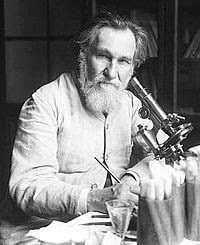
A Russian scientist called Ilya Mechnikov, born in 1845, was the first to suggest that the microbial population of the gut may be important for health.

Mechnikov was a biologist, zoologist and proto-zoologist, best remembered for his pioneering research into the immune system. 

Ilya Ilyich Mechnikov
1845-1916

Mechnikov received the Nobel Prize in Medicine in 1908, shared with Paul Ehrlich, for his work on phagocytosis. 

He is also credited by some sources with coining the term gerontology in 1903, for the emerging study of aging and longevity.

Mechnikov also developed a theory that aging is caused by toxic bacteria in the gut and that lactic acid could prolong life. 

Based on this theory, he drank sour milk every day. 

Mechnikov wrote three books: Immunity in Infectious Diseases, The Nature of Man, and The Prolongation of Life: Optimistic Studies, the last of which, along with his studies into the potential life-lengthening properties of lactic acid bacteria (Lactobacillus delbrueckii subsp. bulgaricus), inspired Japanese scientist Minoru Shirota to begin investigating the causal relationship between bacteria and good intestinal health, which eventually led to the worldwide marketing of kefir and other fermented milk drinks, or probiotics.

Probiotics are live bacteria that may confer a health benefit on the host.

Kefir is a natural probiotic and there is evidence to suggest that probiotic bacteria in the gut of kefir consumers are abundant and diverse.

Even today, many years after Mechnikov and Shirota began their studies, scientists continue to investigate the importance of the gut microflora for human health.

A number of strains of kefir bacteria exhibit high levels of acid and bile tolerance and can survive transit through the stomach and the upper gastrointestinal tract. These may therefore be valuable as probiotic cultures in the production of fermented foods.

Kefir is loaded with valuable enzymes, easily digestible sugars, beneficial acids, vitamins and minerals. 

Water kefir supplies your body with billions of healthy bacteria and yeast strains. Some store-bought probiotic foods or supplements can help, but they are not as potent, and do not usually contain the beneficial yeasts, just bacteria. 

Within your body there are already billions of bacteria and yeast. Your internal microflora support proper digestion, synthesis of vitamins and minerals, and your immune system by warding off foreign and harmful bacteria, yeast and viruses. Kefir has thus long been known to promote and aid in digestion and overall health.  


A study on the effects of kefiran in animals demonstrated that kefiran significantly suppressed increase of blood pressure and reduced the serum cholesterol levels in rats when subjects consumed excessive dietary cholesterol. 

Kefiran supplementation also significantly lowered blood glucose in experimental mice. 

In addition, the administration of kefiran in constipated rats caused an obvious improvement in the levels of faecal moisture and wet weights of faeces.

There is therefore interest in the potential use of kefir as a functional food to prevent some commonly occurring health conditions.

How to make water kefir


Ingredients

  • 1 tablespoon of water kefir grains - you can order these on the internet from various companies
  • 1 tablespoon raw sugar, agave nectar, or maple syrup (honey will work but it is antibacterial and will slowly kill the grains, so this is not a good idea). Water kefir grains grow better in a high-mineral environment. Using high mineral sweeteners such as raw sugar, or adding a bit of molasses to your brew will help your grains grow faster.
  • 1 slice of lemon. The lemon serves as a natural pH buffer, lowering the pH to protect the water kefir from foreign and competing contaminants. Lemon peel also is high in calcium, a main mineral for the grains. 
  • Small handful or raisins or 2-3 dried apricots. The dried fruit serve as an added source of sugar and the various minerals found within them (including a good dosage of potassium and magnesium). It is interesting that just as for us, it is important for kefir grains to receive a large amount of calcium, potassium and magnesium (and other trace minerals). Some dried fruits seem to work better than others. Raisins are the traditional fruit of the recipe, but dates, figs, apples, apricots and coconut among others also work very well.
  • 1 cup filtered or spring water

To make larger quantities, simply scale up the ingredients.

Method

  1. Mix all ingredients in a kilner jar, adjusting quantities to fit the size of the jar you have chosen
  2. Screw on the lid and leave at room temperature for 24 to 48 hours 
  3. Strain and decant the water kefir into a bottle
  4. Rinse the grains, put them back in the jar with the same combination of ingredients and repeat. This can go on indefinitely. 
  5. With the strained kefir you can bottle it and let it 'ripen' out on the counter for another day or two, store it in the fridge, or drink it there and then


Please note that water kefir contains about 0.038% - 2% alcohol, or 16-38 g/L (grams per litre), with the normal amount being around .08% or less for a 48-hour ferment. 

Kefir that is stored and ripened for a few days will continue to increase in alcohol, up to 2-3% (when it is sealed tightly). 

For reference, beer contains about 4-7% and wine 8-14%. Because kefir contains bacteria (and not just yeast like beer or wine) the amount of alcohol kefir can produce is limited by the acetic bacteria which convert the alcohol (produced by the yeasts) to beneficial acids.


Lime; lychee; pineapple and ginger water kefir drinks fermenting
www.cookingforhealth.biz

Variations


You can add fruit and other ingredients to flavour your water kefir, such as:

Slices of fresh root ginger
Slices of lime
Dried fruit such as figs
Fresh fruit
Fruit juice
Coconut water
Nut or grain milks

It's possible to ferment some fruit juices, sugar-based vegetable juices (like beet, carrot or ginger) coconut juice, and possibly other sugar based juices you may find at the store (like orange juice or fruit punch) and sometimes milk (including all forms of mammalian milk: mare, goat, sheep, cow, buffalo, camel etc) or milk alternatives like soy, almond or rice. 

Since water kefir grains are sensitive, its always best to feed your main grains with the normal recipe, and use your extra grains to experiment with in new liquids. 

I have found the grains do not thrive with oranges, pineapples or berries. They loved lychees though - just like me :)

Their growth also seems to slow down when incubated with raw ginger for too long, so I return the grains to an ordinary sugar-lemon mixture after brewing ginger 'beer'.

Here are some delicious recipes I have tried:

Ginger beer


Ingredients
  • 1 tablespoon water kefir grains
  • 1-2 tablespoon raw sugar
  • 1-2 cups water
  • 4 slices fresh root ginger

Method
  1. Mix ingredients together, screw on lid and leave for 24-48 hours
  2. Strain and bottle the liquid
  3. Rinse the grains and repeat with the same ingredients


Lychee Soda


Ingredients
  • 1 tablespoon water kefir grains
  • 1 can lychees in juice
  • Filtered or spring water to top up if required

Method
  1. Mix ingredients together, screw on lid and leave for 24-48 hours
  2. Strain and bottle the liquid
  3. Rinse the grains and repeat with the same ingredients


Pineapple and ginger


Ingredients
  • 1 tablespoon water kefir grains
  • 1 tablespoon raw sugar
  • Small handful of raisins
  • 2 slices pineapple (chopped)
  • 3 slices fresh root ginger
  • Filtered or spring water to top up if required

Method

  1. Mix ingredients together, screw on lid and leave for 24-48 hours
  2. Strain and bottle the liquid
  3. Rinse the grains and repeat with the same ingredients if required

This tasted wonderful but the kefir grains weren't too happy after several rounds of this, so I think it is best to return the grains to the regular sugar-lemon mixture straight after finishing this.

For further information and answers to frequently asked questions about water kefir please click here.


If you have enjoyed this post, please sign up for my newsletter to keep informed of new information, recipes and courses and visit my website.

You can also join me on FacebookTwitter, Pinterest and LinkedIn.