Showing posts with label red pepper. Show all posts

Friday, March 7, 2014

Moroccan-style sweet potato, red bell pepper and white bean stew

Moroccan-style sweet potato, red bell pepper and white bean stew with ras el hanout

A few weeks ago, I was in our local supermarket and picked up a recipe leaflet for a Moroccan dish using a spice called ras el hanout.

The recipe itself contained meat, so I wasn't interested, but ras el hanout is a spice mix I hadn't tried, so I decided to buy some and experiment with some plant-based dishes.

Ras el hanout is a Moroccan spice blend which consists of anywhere between eight and eighty different ingredients - from fragrant rose petals and bitter cloves to cumin, coriander and cardamom. It's rubbed into meat, it's stirred into rice, and it is responsible for the spiced-sweet aromas of Moroccan tagines. The name is Arabic for "head of the shop" and implies a mixture of the best spices the seller has to offer.

Ras el hanout

The ras el hanout I bought contains paprika, cumin seed, coriander seed, chilli flakes, black pepper, cinnamon, fennel seed, turmeric, pimento, shallot, cardamom, mace, pink peppercorn, rose petal, black onion seed, ginger, nutmeg, star anise, clove and galangal.

As it was cold and wet outside, I decided to create a delicious sweet, aromatic, spicy, warming and nourishing dish using sweet potatoes, red and yellow bell peppers, tomatoes, onions, cannellini beans and ras el hanout.


Sweet potatoes are an excellent source of carotenes. In general, the darker the variety of sweet potato, the higher the concentration of carotenes.

Sweet potatoes are also a very good source of vitamins C and B6; and a good source of manganese, copper, biotin, vitamin B5, B2 and dietary fibre.

Sweet potatoes contain unique root storage proteins which have been shown to have antioxidant activity.

Animal studies have shown that sweet potatoes actually help stabilise blood sugar levels and improve the response to the hormone insulin.

Bell peppers are some of the most nutrient-dense foods available. They are a good source of numerous nutrients including vitamin C, beta-carotene, vitamin K, vitamins B1, B6 and folic acid.

Bell peppers are also rich in phytonutrients with exceptional antioxidant activity, such as chlorogenic acid, coumeric acid and zeaxanthin.

Red bell peppers contain lycopene, a carotene also present in tomatoes, that protects against cancer and heart disease. Lycopene has been studied for its beneficial effects in preventing prostate cancer.

The major health benefit of common beans, such as cannellini beans, is their rich source of cholesterol-lowering fibre.

In addition to lowering cholesterol, the high fibre content of beans prevents blood sugar levels from rising too rapidly after a meal, so they are a good choice for those with diabetes, insulin resistance or low blood sugar.

Beans are also good for the heart because of their high content of antioxidants, folic acid, vitamin B6 and magnesium. Folic acid and B6 help lower levels of homocysteine, an amino acid which is an independent risk factor for heart attack, stroke and peripheral vascular disease.

Recipe


Serves 3-4

Ingredients


  • 1 tablespoon olive oil
  • 1 pinch sea salt
  • 1 medium red onion (finely chopped)
  • 1 clove garlic (peeled and finely chopped)
  • 2 teaspoons ras el hanout
  • 1 medium sweet potato (peeled and chopped into small chunks)
  • 1/2 red bell pepper (washed, deseeded and chopped)
  • 1/2 yellow bell pepper (washed, deseeded and chopped)
  • 1 can (400g/14oz) chopped tomatoes (drained weight 240g/8oz)
  • 1 tablespoon tomato puree
  • 1 300g/10.5oz can (175g/6oz drained weight) cooked cannellini beans or other white beans
  • 1 strip (2g) dried wakame sea vegetable (soaked in cold water for 5 minutes and chopped into small pieces). I add sea vegetables to every dish I can as they are so rich in minerals and healthy soluble fibre.
  • 1 dessertspoon sweet white miso (diluted in a little water to make it easier to mix into the stew)
  • Fresh parsley to garnish

Method


Put olive oil and salt in a pan and gently saute the onion and garlic until soft and translucent.

Add ras el hanout, sweet potato, red and yellow peppers, tomatoes, tomato puree, cannellini beans and wakame and simmer for 20 to 30 minutes, or until vegetables are soft.

Add miso to taste and simmer for a further 2 minutes.

Garnish with fresh parsley and serve on a bed of brown rice with a side dish of lightly steamed green vegetables, such as broccoli.

Nutritional information


If you have enjoyed this post and would like to keep in touch please sign up for my free email newsletter.

You can also visit my website and follow me on Facebook, Twitter, Pinterest and LinkedIn.

Monday, August 5, 2013

Broad bean, bell pepper and quinoa salad with basil tahini dressing

Broad bean, bell pepper and quinoa salad with basil tahini dressing
www.cookingforhealth.biz

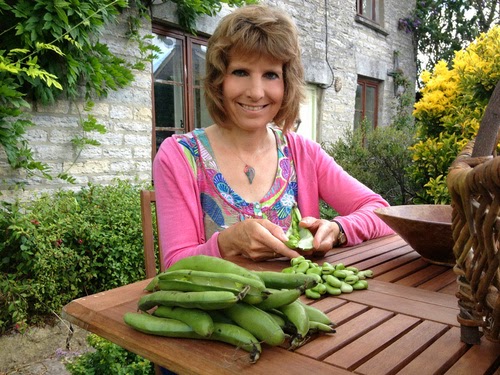
Last week I bought some broad beans, also called fava or faba beans, from our local organic farm. Their botanical name is Vicia faba L.

These sweet, creamy and delicious pod beans only have a short natural season during the summer, so are usually dried, canned or frozen to preserve them. It is therefore a real treat to eat them fresh.


Dried broad or fava bean is an ancient staple of many middle eastern and north African cuisines.

In Egypt, ful madames (literally 'buried beans') is the national dish, and ta'amia, a falafel considered to be superior in every way to the chickpea concoctions favoured further north, is also popular. 

Ground into a flour known as shiro, broad beans also play a central role in the Ethiopian culinary tradition.

Interestingly, in Ancient Egypt broad beans were cultivated but considered unclean and fed to slaves. Herodotus even claimed that Egyptian priests would not even look at beans, let alone eat them.

The Ancient Egyptians weren't the only ones with a thing about broad beans. 

Pythagoras, the Ancient Greek mathematician and philosopher, actually banned his followers from eating them. There are many theories about the reason for this, which I shall return to later.

In Europe broad or fava beans are more frequently eaten green and immature, particularly in Italy where they are harvested when the size of garden peas.  


Broad beans should be double-podded, unless they are very young and tender. 

Step 1

Remove the beans from their pods.


Step 2

Bring a small saucepan of water to the boil and add the beans. Cook for approximately 2 minutes and then drain.

Step 3

Place the beans into a bowl of cold water.

Step 4

Pop the tender, bright green beans out of their thick, leathery skins by using your nail to slit the skin and squeezing gently.


Recipe

Serves 2

Ingredients


Salad
  • 170g double de-podded broad beans (approximately 20 bean pods)
  • 110 g (4oz, 1/2 cup) quinoa
  • 3/4 cup boiling water from kettle
  • 1/2 red bell pepper (washed and chopped into small pieces)
  • 1/2 yellow bell pepper (washed and chopped into small pieces)
  • 15g (1/2 oz) pine nuts


Dressing
  • 85g (3 oz) fresh basil (washed and chopped)
  • 2 teaspoons light tahini (sesame seed paste, available in supermarkets and health food stores)
  • 1 teaspoon sweet white miso (available in some supermarkets and health food stores)
  • 2 teaspoons apple juice concentrate
  • 1 dessert spoon fresh lime juice

Method

  1. Double de-pod the broad beans as described in steps 1 to 4 above
  2. Add hot water to quinoa in a small pan, cover with lid, bring to boil, turn heat down low and simmer with lid on for 15 minutes. Do not remove the lid during cooking.  It is easy to tell when it is done because the seeds display a little white thread that curls around them. Please click here for more information about quinoa.
  3. Put all ingredients for the dressing in a jug and blend until smooth
  4. Mix cooked quinoa, beans, peppers and pine nuts together with the dressing
  5. Serve garnished with fresh basil. Can be eaten as a main meal or in smaller portions as a side dish.


Nutrition and health benefits

Nutrition


Broad beans are very high in protein, starch and fibre and contain many beneficial vitamins, minerals, and phytonutrients with anti-oxidant, anti-hypertensive, hypolipidemic and anti-cancer properties.


Broad beans are a very rich source of dietary fibre, which acts as a bulk laxative that helps to protect the mucous membrane of the colon by decreasing its exposure time to toxic substances as well as by binding to cancer-causing chemicals in the colon. Dietary fibre has also been shown to reduce blood cholesterol levels by decreasing re-absorption of cholesterol binding bile acids in the colon.

Broad beans are rich in phyto-nutrients such as isoflavones and plant-sterols. 

Isoflavones such as genistein and daidzein have been found to protect against breast cancer in laboratory animals. These phytoestrogens appear to have a different mechanism of action from endogenous oestrogen which may explain their protective effects.

Phytosterols, especially ß-sitosterol, are reported to lower cholesterol levels in the body. There is, however, controversy about this and the evidence base is currently not strong enough to support claims that phytosterols protect against cardiovascular disease.

Broad beans contain Levo-dopa or L-dopa, a precursor of neuro-chemicals in the brain such as dopamine, epinephrine and nor-epinephrine. Dopamine in the brain is associated with smooth functioning of body movements. 

L-dopa is used to treat Parkinson's disease and there has been some research interest in whether eating broad beans improves motor performance.

Fresh fava beans are an excellent source of folates. 100 g beans provide 423 µg or 106% of folates. Folate along with vitamin B-12 is one of the essential components of DNA synthesis and cell division. Adequate folate in the diet around conception and during pregnancy may help prevent neural-tube defects in the newborn baby.

They also contain good amounts of vitamin-B6 (pyridoxine), thiamin (vitamin B-1), riboflavin and niacin. These vitamins function as co-enzymes in cellular metabolism of carbohydrate, protein, and fat.

In addition, broad beans are a good source of minerals like iron, copper, manganese, calcium, magnesium and contain high levels of potassium. 

Potassium is an important electrolyte of cell and body fluids. It helps counter pressing effects of sodium on heart and blood pressure.


It isn't all good news...


As I mentioned at the beginning, the ancient philosopher and mathematician, Pythagoras, banned members of his brotherhood from consuming broad or fava beans. 

Fierce debate raged for centuries about the reason for this.

Aristotle said that Pythagoras condemned fava beans "either because they have the shape of testicles, or because they resemble the gates of hell, for they alone have no hinges, or again because they spoil, or because they resemble the nature of the universe, or because of oligarchy, for they are used for drawing lots."

Diogenes proposed that the Pythagoreans rejected favas because they cause thought-disturbing flatulence, saying, "One should abstain from fava beans, since they are full of wind and take part in the soul, and if one abstains from them one's stomach will be less noisy and one's dreams will be less oppressive and calmer."

A later sect known as the Orphics believed that Pythagoras had forbidden the eating of broad beans because they contain the souls of the dead. "Eating fava beans and gnawing on the heads of one's parents are one and the same," went one of their sayings.

Pythagoras by Bruce Pennington

Modern medicine has a more prosaic explanation.

Raw broad beans also contain the alkaloids vicine and convicine which can induce haemolytic anaemia in patients with the hereditary condition glucose-6-phosphate dehydrogenase deficiency. The toxic substances are concentrated in the skin of the bean. This potentially fatal condition is called favism after the fava bean.

Favism has been known for many centuries along the Mediterannean littoral but was first reported in the American medical literature in 1933 and in the UK in the 1950's. More detailed understanding of the physiology of the disease has only emerged in the last 25 years.

The condition is especially prevalent in the Middle East and in old Magna Graecia - the region ruled by the ancient Greeks, which now forms the coastal areas of southern Italy - where as many as 30 per cent of the population in some areas has it.

For most people, consumption of broad or fava beans provides many benefits provided they are prepared properly.

Soaking dried beans overnight followed by cooking, substantially reduces the concentration of antinutrients, such as vicine and convicine.

Sprouting beans is also an effective means of reducing vicine content.

Removal of the skin by double de-podding will also reduce the risk as the potentially toxic substances are concentrated in the skin.

Breeding varieties of Vicia faba that do not contain vicine and convicine is a priority and marker-assisted selection techniques are being investigated.

If you are from a region with a high prevalence of favism or you know that members of your family have suffered from it, you must be very cautious.

Whether poisonings were the basis of Pythagoras' pronouncement or not, no one can say for certain.

Iamblichus tells of the time a group of Pythagoreans were being pursued by their enemies when they came across a field of favas in bloom. Rather than disobey the master's dictates and flee through the field, they were slaughtered. And when two who were captured were questioned about their beliefs, they refused to answer. The husband chose death and the wife, a Spartan, bit off her tongue and spit it at her captors to avoid spilling the beans.

Broad beans are rich in tyramine, and thus should be avoided by those taking monoamine oxidase inhibitors.


If you have enjoyed this post, please sign up for my newsletter to keep informed of new information, recipes and courses and visit my website.

You can also join me on Facebook, Twitter and LinkedIn.


Monday, March 16, 2009

Millet and salmon croquettes


In my last post I explained a bit about millet and its health benefits. Now you can have a go at a delicious recipe using millet, which my students and children love.

Given the variation in plant species that may be described as "millet", the batches of millet grain you buy at health food stores can be a bit variable in quality.

You may thus need to experiment a little with the quantity of water you add when cooking millet. Millet tends to absorb water readily, so I usually find that I need 3 cups of water to 1 cup of millet.

When cooking whole grains, the important thing is to bring the cooking water to a boil (I usually add boiling water from a kettle in the first place to speed up the process), then turn the heat right down low and put the lid on tightly, so that the water simmers without boiling over.

You will need a good quality pan with a thick base and possibly also a heat disperser, depending on how easily you can control the heat source on your cooker. If possible, use a gas flame rather than an electric cooker.

Do not be tempted to take off the lid and check your millet for at least 15 to 20 minutes after it has started simmering - you want to keep the steam inside the pan as this helps to cook the grain without the pan drying out.

Your aim is to end up with soft cooked millet, no water in the pan and no burnt bits!

Recipe

Millet and salmon croquettes

Ingredients

  • 1 cup millet
  • 3 cups water
  • 2 bay leaves
  • 1 fillet fresh salmon
  • ½ red pepper (grilled, peeled, washed and cut finely)
  • 3 spring onions (scallions) or chives (chopped finely)
  • 3 sprigs fresh herbs, e.g., dill or basil or parsley (finely chopped)
  • Black pepper
  • 2 teaspoons white miso (or more to taste)
  • Rice flour
  • Olive oil

Method

  • Steam the fresh fish with bay leaves and a pinch of sea salt for 5 minutes or until cooked.
  • Wash the millet, add 3 cups of water and a bay leaf, bring to the boil and then turn the heat down low and cook with the lid tightly on for 35 minutes, until all the water has evaporated and the millet is soft.
  • Break up the steamed salmon with a fork and mix with the millet, spring onions, red pepper, black pepper, fresh herbs, and 2 tsp white miso (N.B. do not dilute the miso in water otherwise the croquettes will be too soggy to stick together). Check for taste and add more miso if necessary.
  • Shape the mixture into croquettes, coat with some rice flour and put in the fridge for 15 minutes to cool down, as this helps to stop the croquettes from crumbling.
  • Brush with a little olive oil and bake in the oven until golden brown all over. Alternatively, you can pan fry them if you wish.


If you have enjoyed this post and would like to keep in touch please sign up for my free email newsletter. 

You can also follow me on Facebook, Twitter and LinkedIn and visit my website.