Showing posts with label croquettes. Show all posts

Saturday, August 10, 2013

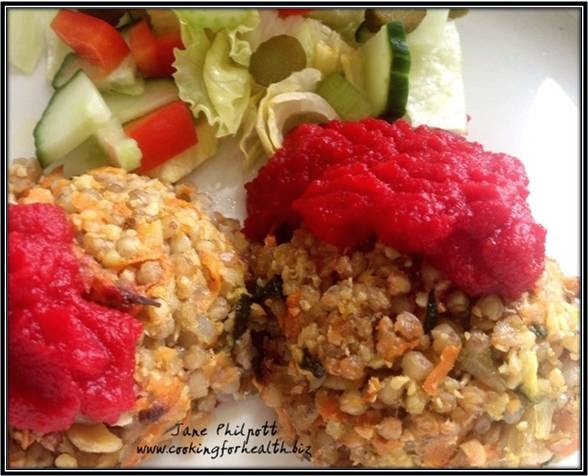
Buckwheat, sweet potato, courgette and cashew croquettes with roasted beetroot and onion sauce


Here is a gluten-free plant-based recipe for some savoury croquettes. These are versatile and easy to make. They can be served as a grain dish alongside other dishes as part of a main meal or eaten on their own with a green salad for a light lunch.


You may be thinking "what on earth is buckwheat?"

Despite its name, buckwheat is not botanically related to wheat at all.

This is excellent news if you are on a gluten-free diet.

Buckwheat is a broad-leaf plant, not a grass like wheat.

The term 'buckwheat' refers to plants in two genera of the family Polygonaceae: the Eurasian genus Fagopyrum, and the North American genus Eriogonum. Rhubarb is also a member of this plant family.

The crop plant, common buckwheat, is Fagopyrum esculentum.

Tartary buckwheat (F. tataricum Gaertn.) or "bitter buckwheat" is also used as a crop, but is much less common.


Buckwheat (Fagopyrum esculentum)

Common buckwheat was domesticated and first cultivated in southeast Asia, possibly around 6000 BC, and from there spread to Europe and to Central Asia and Tibet.  It was cultivated in Europe in the Balkans around 4000 BC.

In Central and Eastern Europe, kasha - cooked buckwheat - is eaten as porridge, used in pilav or for stuffing traditional Jewish snacks called knish.


Buckwheat grain

Buckwheat is either eaten whole or ground into flour to be used in breads, pancakes or thin noodles (soba).

It can be purchased raw to be lightly dry-roasted at home before cooking and generally combines well with vegetables.

In recent years, buckwheat has been used as a substitute for other grain in gluten free beer.

Nutrients and health benefits of buckwheat


Buckwheat contains about 75% carbohydrate, 18% protein and is rich in iron, zinc and selenium.

Its protein contains all of the essential amino acids except lysine, so its protein value is over 90%.

It also contains significant quantities of anti-oxidants.

One of these is called rutin, a phytochemical with interesting biological activities.

Conventionally, rutin is used as an antimicrobial, antifungal, and antiallergic agent. However, current research suggests potential benefits for the treatment of various chronic diseases such as cancer, diabetes, hypertension and hypercholesterolemia.

Rutin is said to strengthen capillary walls, reducing haemorrhaging in people with high blood pressure; reduce blood pressurelower blood lipidsprevent damage from alcohol-induced inflammation in the liver; and increase circulation to the hands and feet.


RECIPE

Makes about 10 croquettes

Ingredients


Croquettes

1 cup buckwheat grain (washed)
2 cups boiling water from kettle
1/2 medium onion (finely chopped)
1/2 small sweet potato (grated)
1/4 medium courgette (zucchini), grated
1 small handful cashews (finely chopped)
1/2 strip wakame sea vegetable (soaked for 10 minutes and finely chopped) 

Sauce

4 small beetroot or 2 medium beetroot (washed and scrubbed)
2 medium carrots (peeled)
1 medium onion (unpeeled)
1/2 cup water
2 tsp white miso

Instructions


Sauce

  1. Pre-heat oven to 190 C, wrap beetroot, carrot and whole onion in foil and bake for 45 minutes or until vegetables are soft.
  2. While vegetables are cooking, prepare the croquettes as shown below.
  3. Allow beetroot, carrots and onion to cool, remove skins from cooked beetroot and onion. Cut cooked beetroot, carrot and onion into pieces, put all in a food processor and blend until smooth. Add water to achieve the desired consistency for a sauce. Add ume seasoning, apple juice concentrate and white miso to taste.

Croquettes

  1. Place buckwheat in a thick pan, add hot water, put the lid on and bring to the boil. When boiling, turn heat down low and simmer with the lid on for 20-30 minutes, until the buckwheat is soft and cooked. There should be no water left in the pan.
  2. While the buckwheat is cooking, saute the onion, grated sweet potato, grated courgette (zucchini) and spices until vegetables are soft and the onion translucent. Add chopped cashews and wakame.
  3. Mix vegetables with buckwheat, mould into round balls and flatten gently. If you use too many vegetables in proportion to buckwheat, the mixture will become too moist and the croquettes won't stick together. 
  4. Place on a greased baking tray and bake in a pre-heated oven at 180 C/gas mark 4 for 20 minutes or until croquettes are golden brown.
  5. Serve with beetroot and onion sauce and a salad garnish.


Variations


Like rice and other grains, buckwheat provides a neutral base to which almost any combination of seasonal vegetables, vegetarian proteins, herbs and spices can be added. 

You can also use a variation of this recipe to make buckwheat pilav. Use 1/2 cup buckwheat cooked in 1 cup water to the same quantity of vegetables listed above. Instead of forming into patties, just mix grain and vegetables together and serve with a garnish.


Buckwheat pilav


If you have enjoyed this post, please sign up for my newsletter to keep informed of new information, recipes and courses and visit my website.

You can also join me on FacebookTwitter, Pinterest and LinkedIn.


Monday, March 16, 2009

Millet and salmon croquettes


In my last post I explained a bit about millet and its health benefits. Now you can have a go at a delicious recipe using millet, which my students and children love.

Given the variation in plant species that may be described as "millet", the batches of millet grain you buy at health food stores can be a bit variable in quality.

You may thus need to experiment a little with the quantity of water you add when cooking millet. Millet tends to absorb water readily, so I usually find that I need 3 cups of water to 1 cup of millet.

When cooking whole grains, the important thing is to bring the cooking water to a boil (I usually add boiling water from a kettle in the first place to speed up the process), then turn the heat right down low and put the lid on tightly, so that the water simmers without boiling over.

You will need a good quality pan with a thick base and possibly also a heat disperser, depending on how easily you can control the heat source on your cooker. If possible, use a gas flame rather than an electric cooker.

Do not be tempted to take off the lid and check your millet for at least 15 to 20 minutes after it has started simmering - you want to keep the steam inside the pan as this helps to cook the grain without the pan drying out.

Your aim is to end up with soft cooked millet, no water in the pan and no burnt bits!

Recipe

Millet and salmon croquettes

Ingredients

  • 1 cup millet
  • 3 cups water
  • 2 bay leaves
  • 1 fillet fresh salmon
  • ½ red pepper (grilled, peeled, washed and cut finely)
  • 3 spring onions (scallions) or chives (chopped finely)
  • 3 sprigs fresh herbs, e.g., dill or basil or parsley (finely chopped)
  • Black pepper
  • 2 teaspoons white miso (or more to taste)
  • Rice flour
  • Olive oil

Method

  • Steam the fresh fish with bay leaves and a pinch of sea salt for 5 minutes or until cooked.
  • Wash the millet, add 3 cups of water and a bay leaf, bring to the boil and then turn the heat down low and cook with the lid tightly on for 35 minutes, until all the water has evaporated and the millet is soft.
  • Break up the steamed salmon with a fork and mix with the millet, spring onions, red pepper, black pepper, fresh herbs, and 2 tsp white miso (N.B. do not dilute the miso in water otherwise the croquettes will be too soggy to stick together). Check for taste and add more miso if necessary.
  • Shape the mixture into croquettes, coat with some rice flour and put in the fridge for 15 minutes to cool down, as this helps to stop the croquettes from crumbling.
  • Brush with a little olive oil and bake in the oven until golden brown all over. Alternatively, you can pan fry them if you wish.


If you have enjoyed this post and would like to keep in touch please sign up for my free email newsletter

You can also follow me on Facebook, Twitter and LinkedIn and visit my website.


Sunday, March 1, 2009

Recipe for buckwheat croquettes with beetroot sauce

The term buckwheat refers to plants in two genera of the family Polygonaceae: the Eurasian genus Fagopyrum, and the North American genus Eriogonum. The crop plant, common buckwheat, is Fagopyrum esculentum. Tartary buckwheat (F. tataricum Gaertn.) or "bitter buckwheat" is also used as a crop, but it is much less common. Despite the common name and the grain-like use of the crop, buckwheats are not grasses and are not related to wheat. Indeed, buckwheat is in the same plant family as rhubarb.

Common buckwheat was domesticated and first cultivated in southeast Asia, possibly around 6000 BC, and from there spread to Europe and to Central Asia and Tibet. It was cultivated in Europe in the Balkans around 4000 BC.

Buckwheat contains about 75 per cent carbohydrate, 18 per cent protein and is rich in iron, zinc and selenium. Its protein contains all of the essential amino acids except lysine, so its protein value is over 90 per cent. It also contains significant quantities of anti-oxidants. One of these is called rutin, a medicinal chemical that strengthens capillary walls, reducing haemorrhaging in people with high blood pressure.

Buckwheat is either eaten whole or ground into flour to be used in breads, pancakes or thin noodles (Soba). It can be purchased raw to be lightly dry-roasted at home before cooking and generally combines well with vegetables. In recent years, buckwheat has been used as a substitute for other grain in gluten free beer.

RECIPE

Buckwheat Croquettes with Beetroot Sauce

Ingredients

  • 1 cup raw buckwheat
  • 2 cups water
  • Pinch sea salt
  • ½ onion (finely diced)
  • 1 tsp dried thyme
  • 1 tsp barley miso

Sauce

  • 2 onions (diced)
  • 4 carrots (diced)
  • ½ cooked beetroot (diced)
  • Small piece of dulse sea vegetable
  • 1 garlic clove (crushed)
  • Sea salt
  • Olive oil
  • Umeboshi vinegar
  • Dried basil
  • Apple juice concentrate

Method

Croquettes

  • Wash the buckwheat, drain and dry roast in a frying pan with no oil until the water has evaporated and the buckwheat is warm throughout (but do not burn!)
  • Place buckwheat in a pot with the water and a pinch of sea salt. Put on the lid and cook on a medium flame until it boils, then reduce to a minimum flame and simmer for 30 minutes until all the water has gone.
  • Add some oil to a frying pan, add the onions and sauté until the onions are translucent and soft.
  • Add the thyme and stir for a couple of minutes.
  • Mix the onion, thyme and 1 tsp miso with the cooked buckwheat. Taste and adjust seasonings if necessary. While the buckwheat mixture is still warm, form into sausage-shaped croquettes.
  • Pan fry croquettes until they are golden brown all over. This quantity of buckwheat will make about 8 croquettes.

Beetroot sauce

  • Sauté the diced onions and garlic with some olive oil and a pinch of sea salt until soft and translucent.
  • Add the carrots, herbs, dulse and a small amount of water. Cover and simmer for 30 minutes until the carrots are soft, taking care not to let the water dry out completely (it will stick and burn otherwise).
  • Add the beetroot and blend all the vegetables, adding some umeboshi vinegar and apple juice concentrate to taste. Serve hot.

For information and practical tuition on cooking with whole grains, why not come along to a Cooking for Health class on Cooking with Whole Foods, in Somerset, UK, with nutrition consultant and healthy cookery teacher, Dr Jane Philpott.