Showing posts with label beetroot. Show all posts

Saturday, August 10, 2013

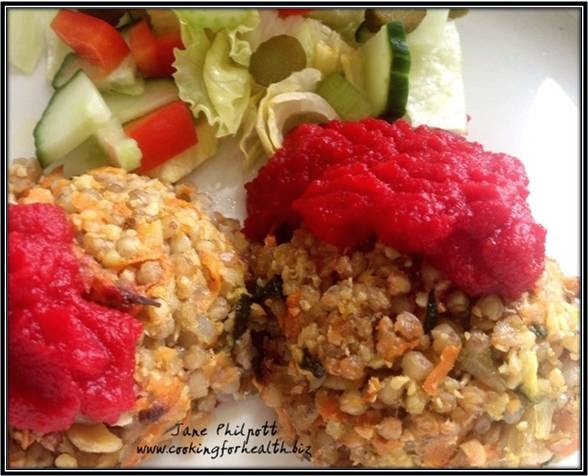
Buckwheat, sweet potato, courgette and cashew croquettes with roasted beetroot and onion sauce


Here is a gluten-free plant-based recipe for some savoury croquettes. These are versatile and easy to make. They can be served as a grain dish alongside other dishes as part of a main meal or eaten on their own with a green salad for a light lunch.


You may be thinking "what on earth is buckwheat?"

Despite its name, buckwheat is not botanically related to wheat at all.

This is excellent news if you are on a gluten-free diet.

Buckwheat is a broad-leaf plant, not a grass like wheat.

The term 'buckwheat' refers to plants in two genera of the family Polygonaceae: the Eurasian genus Fagopyrum, and the North American genus Eriogonum. Rhubarb is also a member of this plant family.

The crop plant, common buckwheat, is Fagopyrum esculentum.

Tartary buckwheat (F. tataricum Gaertn.) or "bitter buckwheat" is also used as a crop, but is much less common.


Buckwheat (Fagopyrum esculentum)

Common buckwheat was domesticated and first cultivated in southeast Asia, possibly around 6000 BC, and from there spread to Europe and to Central Asia and Tibet.  It was cultivated in Europe in the Balkans around 4000 BC.

In Central and Eastern Europe, kasha - cooked buckwheat - is eaten as porridge, used in pilav or for stuffing traditional Jewish snacks called knish.


Buckwheat grain

Buckwheat is either eaten whole or ground into flour to be used in breads, pancakes or thin noodles (soba).

It can be purchased raw to be lightly dry-roasted at home before cooking and generally combines well with vegetables.

In recent years, buckwheat has been used as a substitute for other grain in gluten free beer.

Nutrients and health benefits of buckwheat


Buckwheat contains about 75% carbohydrate, 18% protein and is rich in iron, zinc and selenium.

Its protein contains all of the essential amino acids except lysine, so its protein value is over 90%.

It also contains significant quantities of anti-oxidants.

One of these is called rutin, a phytochemical with interesting biological activities.

Conventionally, rutin is used as an antimicrobial, antifungal, and antiallergic agent. However, current research suggests potential benefits for the treatment of various chronic diseases such as cancer, diabetes, hypertension and hypercholesterolemia.

Rutin is said to strengthen capillary walls, reducing haemorrhaging in people with high blood pressure; reduce blood pressurelower blood lipidsprevent damage from alcohol-induced inflammation in the liver; and increase circulation to the hands and feet.


RECIPE

Makes about 10 croquettes

Ingredients


Croquettes

1 cup buckwheat grain (washed)
2 cups boiling water from kettle
1/2 medium onion (finely chopped)
1/2 small sweet potato (grated)
1/4 medium courgette (zucchini), grated
1 small handful cashews (finely chopped)
1/2 strip wakame sea vegetable (soaked for 10 minutes and finely chopped) 

Sauce

4 small beetroot or 2 medium beetroot (washed and scrubbed)
2 medium carrots (peeled)
1 medium onion (unpeeled)
1/2 cup water
2 tsp white miso

Instructions


Sauce

  1. Pre-heat oven to 190 C, wrap beetroot, carrot and whole onion in foil and bake for 45 minutes or until vegetables are soft.
  2. While vegetables are cooking, prepare the croquettes as shown below.
  3. Allow beetroot, carrots and onion to cool, remove skins from cooked beetroot and onion. Cut cooked beetroot, carrot and onion into pieces, put all in a food processor and blend until smooth. Add water to achieve the desired consistency for a sauce. Add ume seasoning, apple juice concentrate and white miso to taste.

Croquettes

  1. Place buckwheat in a thick pan, add hot water, put the lid on and bring to the boil. When boiling, turn heat down low and simmer with the lid on for 20-30 minutes, until the buckwheat is soft and cooked. There should be no water left in the pan.
  2. While the buckwheat is cooking, saute the onion, grated sweet potato, grated courgette (zucchini) and spices until vegetables are soft and the onion translucent. Add chopped cashews and wakame.
  3. Mix vegetables with buckwheat, mould into round balls and flatten gently. If you use too many vegetables in proportion to buckwheat, the mixture will become too moist and the croquettes won't stick together. 
  4. Place on a greased baking tray and bake in a pre-heated oven at 180 C/gas mark 4 for 20 minutes or until croquettes are golden brown.
  5. Serve with beetroot and onion sauce and a salad garnish.


Variations


Like rice and other grains, buckwheat provides a neutral base to which almost any combination of seasonal vegetables, vegetarian proteins, herbs and spices can be added. 

You can also use a variation of this recipe to make buckwheat pilav. Use 1/2 cup buckwheat cooked in 1 cup water to the same quantity of vegetables listed above. Instead of forming into patties, just mix grain and vegetables together and serve with a garnish.


Buckwheat pilav


If you have enjoyed this post, please sign up for my newsletter to keep informed of new information, recipes and courses and visit my website.

You can also join me on FacebookTwitter, Pinterest and LinkedIn.


Tuesday, February 19, 2013

Beetroot, carrot, apple and ginger juice


Here is a strengthening juice to tickle your tastebuds and ward off colds, tummy bugs and hangovers.

It is rich in nutrients and phytonutrients, with antioxidant, anti-inflammatory, anti-hypertensive and anti-bacterial properties.

Ingredients
1 fresh beet, with root and greens
2 carrots
1 apple
1 piece fresh root ginger (2-4 cm)

Instructions
Process all ingredients in a vegetable juicer and drink.  Super easy.


Health benefits

Beets
Beet greens are even higher in nutritional value than beetroots, as they are richer in calcium, iron, and vitamins A and C.  Beetroots are an excellent source of folic acid and a very good source of fibre, manganese and potassium.  Both beet greens and roots are a good source of magnesium, phosphorus, iron and vitamin B6.

Beetroots have long been used for medicinal purposes, particularly as they are known to stimulate the liver's detoxification processes.  The pigment that  gives beets their deep purple colour is called betacyanin and is a powerful anti-cancer agent.

Beetroot may also protect against heart disease as it has been shown to dilate blood vessels and lower diastolic blood pressure.

Carrots
Carrots provide the highest source of vitamin A carotenes of commonly consumed vegetables.  Two carrots provide roughly four times the daily reference nutrient intake of vitamin A.  Carrots also provide excellent levels of vitamin K, biotin and fibre and very good levels of vitamins C, B1 and B6, and potassium.  The antioxidant content of carrots helps to protect against chronic diseases like heart disease and cancer.  Carrots also promote good vision and along with other fruit and vegetables help to protect against macular degeneration.

Apples
Apples are a good source of vitamin C, pectin and other fibres, and potassium.  Most of the apple's important nutrients are contained in its skin.  If apples are raw and unpeeled, they are also a great source of many phytonutrients, such as ellagic acid and flavonoids such as quercetin.  The old saying "an apple a day keeps the doctor away" has a great deal of truth in it.  In a review of various studies, apple consumption was shown consistently to be associated with a reduced risk of heart disease, cancer, asthma and type 2 diabetes, compared with other fruits and vegetables.


Root ginger
Ginger contains small quantities of vitamins such as B6 and B5, as well as minerals such as potassium, manganese, copper, and magnesium.  It has been used since ancient times for its anti-inflammatory, antioxidant, carminative, anti-flatulent, and anti-microbial properties. The root contains essential oils such as gingerol, zingerone, shogaol, farnesene, and small amounts of β-phelladrene, cineol, and citral.   Gingerols help improve intestinal motility and have anti-inflammatory, painkiller (analgesic), nerve soothing, anti-pyretic as well as anti-bacterial properties. Studies have shown that ginger may reduce nausea induced by chemotherapy, motion sickness or pregnancy and may help relieve migraine headache.  Zingerone, a chemical compound which gives pungent character to the ginger root, is effective against E.coli induced diarrhoea, especially in children.

You can find more free articles and resources on my website and receive further information and news by signing up for my free newsletter.

You can also find me on Facebook, Twitter, Pinterest and LinkedIn.


Sunday, March 1, 2009

Recipe for buckwheat croquettes with beetroot sauce

The term buckwheat refers to plants in two genera of the family Polygonaceae: the Eurasian genus Fagopyrum, and the North American genus Eriogonum. The crop plant, common buckwheat, is Fagopyrum esculentum. Tartary buckwheat (F. tataricum Gaertn.) or "bitter buckwheat" is also used as a crop, but it is much less common. Despite the common name and the grain-like use of the crop, buckwheats are not grasses and are not related to wheat. Indeed, buckwheat is in the same plant family as rhubarb.

Common buckwheat was domesticated and first cultivated in southeast Asia, possibly around 6000 BC, and from there spread to Europe and to Central Asia and Tibet. It was cultivated in Europe in the Balkans around 4000 BC.

Buckwheat contains about 75 per cent carbohydrate, 18 per cent protein and is rich in iron, zinc and selenium. Its protein contains all of the essential amino acids except lysine, so its protein value is over 90 per cent. It also contains significant quantities of anti-oxidants. One of these is called rutin, a medicinal chemical that strengthens capillary walls, reducing haemorrhaging in people with high blood pressure.

Buckwheat is either eaten whole or ground into flour to be used in breads, pancakes or thin noodles (Soba). It can be purchased raw to be lightly dry-roasted at home before cooking and generally combines well with vegetables. In recent years, buckwheat has been used as a substitute for other grain in gluten free beer.

RECIPE

Buckwheat Croquettes with Beetroot Sauce

Ingredients

  • 1 cup raw buckwheat
  • 2 cups water
  • Pinch sea salt
  • ½ onion (finely diced)
  • 1 tsp dried thyme
  • 1 tsp barley miso

Sauce

  • 2 onions (diced)
  • 4 carrots (diced)
  • ½ cooked beetroot (diced)
  • Small piece of dulse sea vegetable
  • 1 garlic clove (crushed)
  • Sea salt
  • Olive oil
  • Umeboshi vinegar
  • Dried basil
  • Apple juice concentrate

Method

Croquettes

  • Wash the buckwheat, drain and dry roast in a frying pan with no oil until the water has evaporated and the buckwheat is warm throughout (but do not burn!)
  • Place buckwheat in a pot with the water and a pinch of sea salt. Put on the lid and cook on a medium flame until it boils, then reduce to a minimum flame and simmer for 30 minutes until all the water has gone.
  • Add some oil to a frying pan, add the onions and sauté until the onions are translucent and soft.
  • Add the thyme and stir for a couple of minutes.
  • Mix the onion, thyme and 1 tsp miso with the cooked buckwheat. Taste and adjust seasonings if necessary. While the buckwheat mixture is still warm, form into sausage-shaped croquettes.
  • Pan fry croquettes until they are golden brown all over. This quantity of buckwheat will make about 8 croquettes.

Beetroot sauce

  • Sauté the diced onions and garlic with some olive oil and a pinch of sea salt until soft and translucent.
  • Add the carrots, herbs, dulse and a small amount of water. Cover and simmer for 30 minutes until the carrots are soft, taking care not to let the water dry out completely (it will stick and burn otherwise).
  • Add the beetroot and blend all the vegetables, adding some umeboshi vinegar and apple juice concentrate to taste. Serve hot.

For information and practical tuition on cooking with whole grains, why not come along to a Cooking for Health class on Cooking with Whole Foods, in Somerset, UK, with nutrition consultant and healthy cookery teacher, Dr Jane Philpott.